Brands
The Holy Trinity
Three Geneva-rooted houses, the century-long convention they built — and our argument for replacing two of them.
The Original
Three names sit above the rest in watchmaking: Patek Philippe, Audemars Piguet, and Vacheron Constantin — the Geneva-rooted houses collectors call the Holy Trinity.
Vacheron Constantin (1755) is the eldest, with the longest uninterrupted production of any watchmaker.
Patek Philippe (1839) is the most prestigious, defined by complications and restraint.
Audemars Piguet (1875) is the disruptor, the family-owned house that broke its own rules in 1972 with the Royal Oak — luxury sport in steel, by Gérald Genta.
What united them is independent movement-making, uncompromising finishing, and a century-plus of horological firsts. What separates them is temperament: Vacheron (today part of Richemont) the scholar, Patek the patrician, AP the rebel. They are not the only houses at this level — Lange and a few independents argue otherwise — but the Trinity remains the reference point.
The Trinity Is Over. Long Live the Quartet.
For a century the Holy Trinity meant Patek Philippe, Audemars Piguet, and Vacheron Constantin. We don't think it should anymore — and we don't think three is the right number.
Two of the three have quietly broken faith with the people who built their reputation. Patek and AP now operate behind manufactured scarcity — waiting lists that don't move, allocations that reward purchase history rather than passion, and boutique encounters that too often leave new clients feeling tolerated rather than welcomed. Innovation has slowed in step with availability: iterative refreshes, anniversary editions, and the same icons in new colors. Heritage, repackaged.
Meanwhile, the real story in high watchmaking has been happening at houses the old Trinity overlooked, dismissed, or — in Vacheron's case — failed to recognize as the only one of the three still doing the work.
So here is myhora's Quartet — four houses producing more than 500 watches a year, each indispensable for a different reason.
Vacheron Constantin — the historic anchor
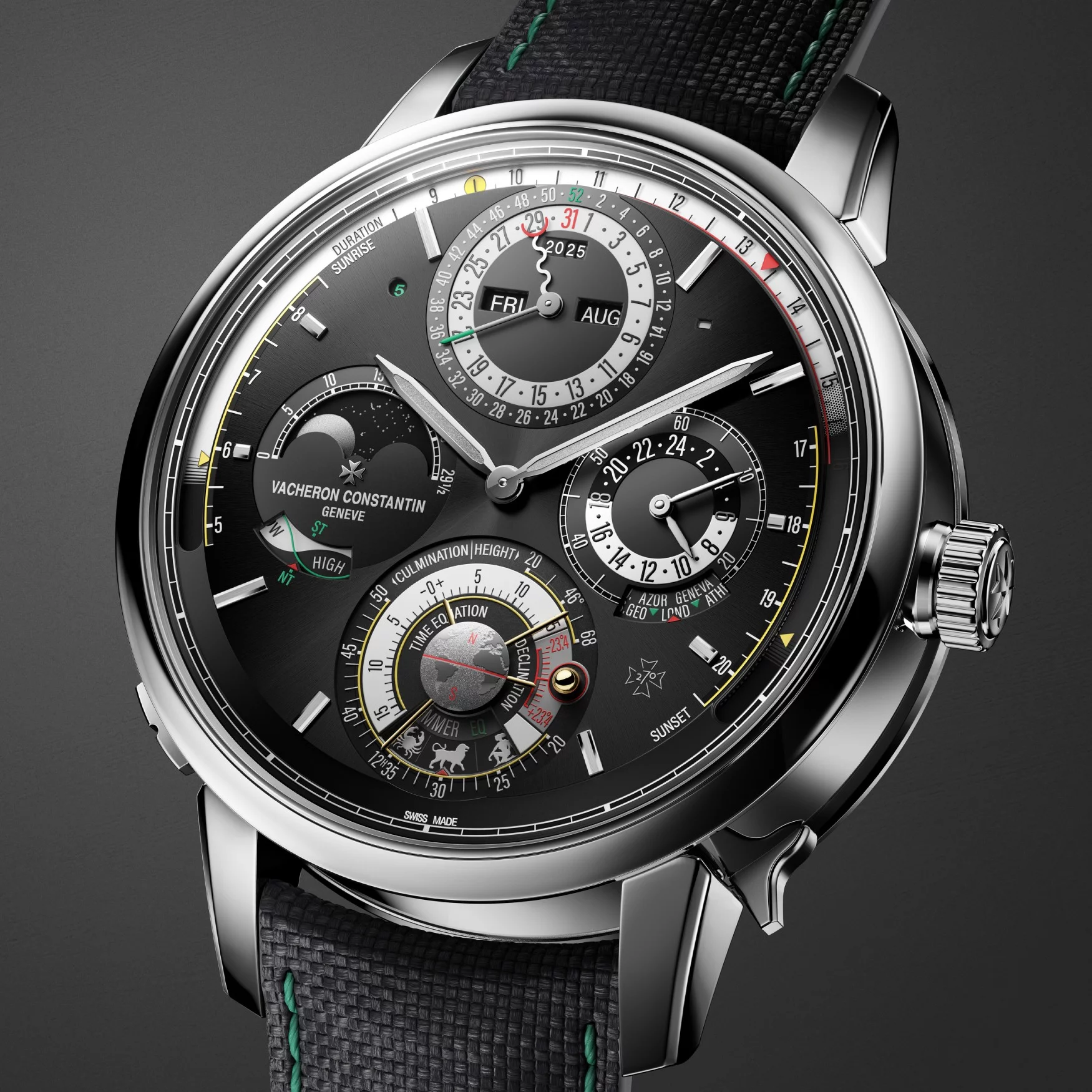
Ironically the only former Trinity member no longer independent (owned by Richemont), Vacheron has done the opposite of its old peers. It remains broadly accessible to actual buyers, has produced the most genuinely new watchmaking of the three over the past decade, and treats walk-in collectors like guests, not gatekept supplicants. The Berkley Grand Complication, the Traditionnelle Tourbillon Retrograde, the depth of Les Cabinotiers — and then the Solaria. Both of them. The monumental Solaria astronomical clock, an object that belongs in the same conversation as the great public timepieces of history, and the Les Cabinotiers Solaria Ultra Grand Complication wristwatch — the most complicated wristwatch ever made, including a system that lets the wearer track the position of any star in the sky from the wrist. Nobody else attempted this. Vacheron just did it. 270 years of continuous production, and still the easiest of the old guard to actually buy from.
F.P. Journe — the living master
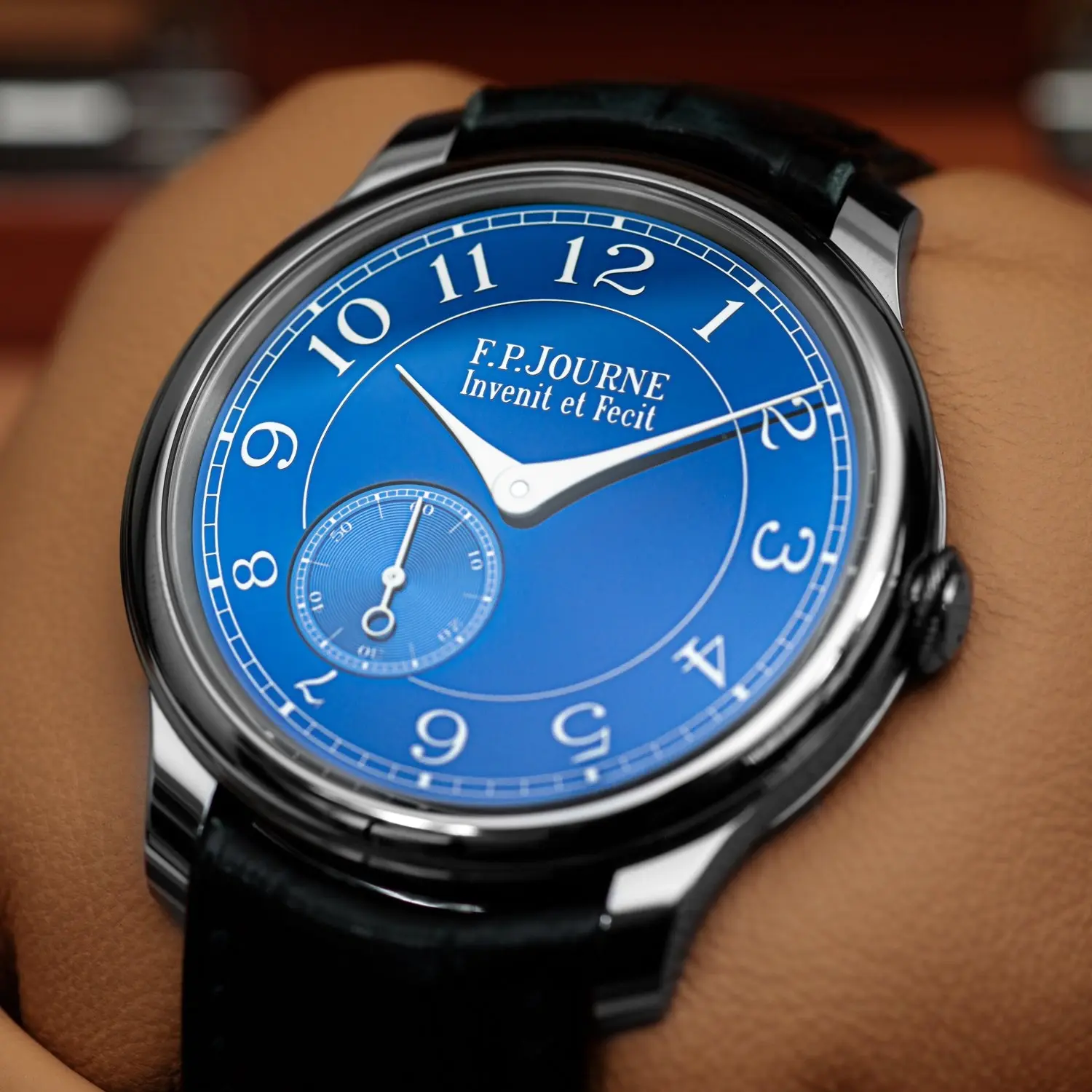
Born in Marseille in 1957, François-Paul Journe trained in Paris under his uncle, the watchmaker and restorer Michel Journe, and graduated from the École d'Horlogerie in 1976. Restoration was his real education: through the painstaking revival of 18th-century pieces, he absorbed the intellectual tradition of Breguet, Antide Janvier, and Ferdinand Berthoud — the golden age of mechanical timekeeping, where the goal wasn't ornament but precision and ideas. He built his first tourbillon pocket watch by hand at 25, every component including the case made himself. Then for two decades he made unique pieces for private collectors, watching the research dissolve each time the commissioner walked out the door. Montres Journe SA was founded in 1999 to fix that — to put the same level of invention into a small series so more than one person could own it.
The motto on every dial, Invenit et Fecit — "invented and made" — is meant literally. The Chronomètre à Résonance was inspired by an Antide Janvier resonance regulator from circa 1780 that Journe later acquired. The Tourbillon Souverain à Remontoir d'Égalité solved a problem Breguet had wrestled with two centuries earlier. The Centigraphe was the first wristwatch to record 1/100th of a second. He is the only three-time winner of the Aiguille d'Or at the Grand Prix d'Horlogerie de Genève. He owns his own case maker (Les Boîtiers de Genève) and his own dial maker (Les Cadraniers de Genève), and is the only major watchmaker still based in central Geneva — in a converted gaslamp factory in Coulouvrenière. Production is roughly 800 watches a year. Sold only through his own boutiques. Allocations go to people who care about watches, not people who've spent their way onto a list. Most serious collectors believe his movements will be the future classics — the Breguets and Daniels of our era, signed in our lifetime.
Parmigiani Fleurier — the restorer's house, reborn
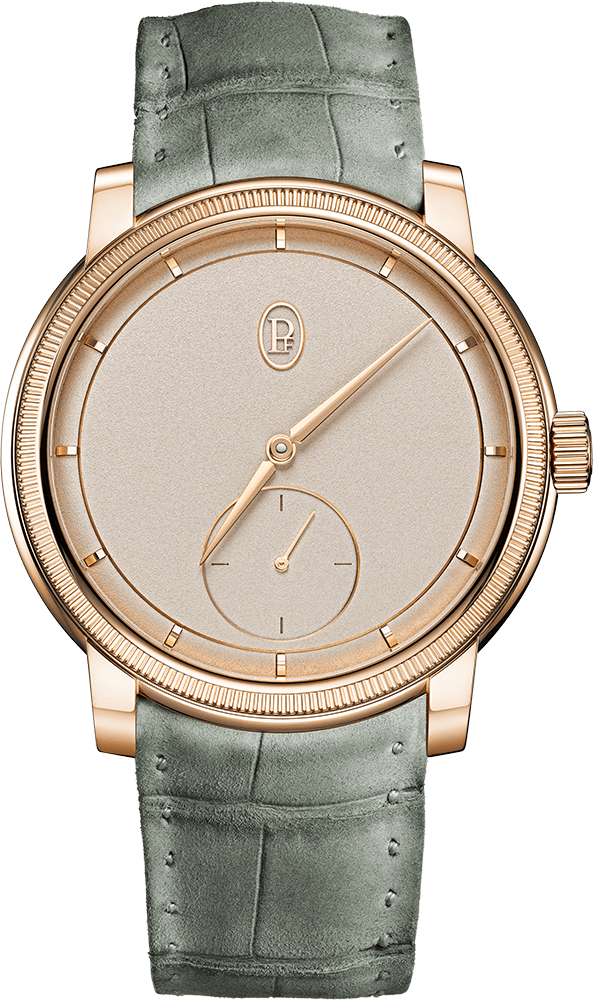
Founded in 1996 by Michel Parmigiani — who spent decades restoring the most important antique timepieces in the world before ever putting his name on a dial — Parmigiani brings a depth of historical knowledge no other modern house can match. But the brand's current chapter belongs as much to its CEO. Guido Terreni arrived from Bvlgari in January 2021 with a clear thesis: the watch industry had calcified around an outdated idea of elegance — what he calls the legacy of Geneva's Calvinist formality — and a new sartorialism was emerging that the old houses weren't dressing.
His view, stated plainly across multiple interviews, is that true luxury is cultural, not materialistic — a refined alternative voice in a loud world that mostly trades on social status. Watches, in his framing, should pair with the wardrobe of the modern, well-dressed man — the rise of films like Kingsman, the return of tailoring, the way pink and pastel and Arctic Rose now read as masculine when handled with restraint. He has called the watch "a wedding ring between the values of the brand and the values of the customer". The Tonda PF, launched seven months after he arrived in the middle of the pandemic, became one of the most quietly admired collections in watchmaking — integrated bracelets, fine guilloché dials, dressy proportions, finishing that rivals anything from the old Trinity, often at meaningfully lower prices. The reissued Toric, with its gold-on-gold movements and golden-ratio proportions, is a dress watch built for people who actually still dress. Backed by the Sandoz Family Foundation — which owns the manufacture and gives Parmigiani its own movement, case, and dial making — Terreni answers to craft and to a clear aesthetic vision rather than to quarterly numbers.
MB&F — the imagination
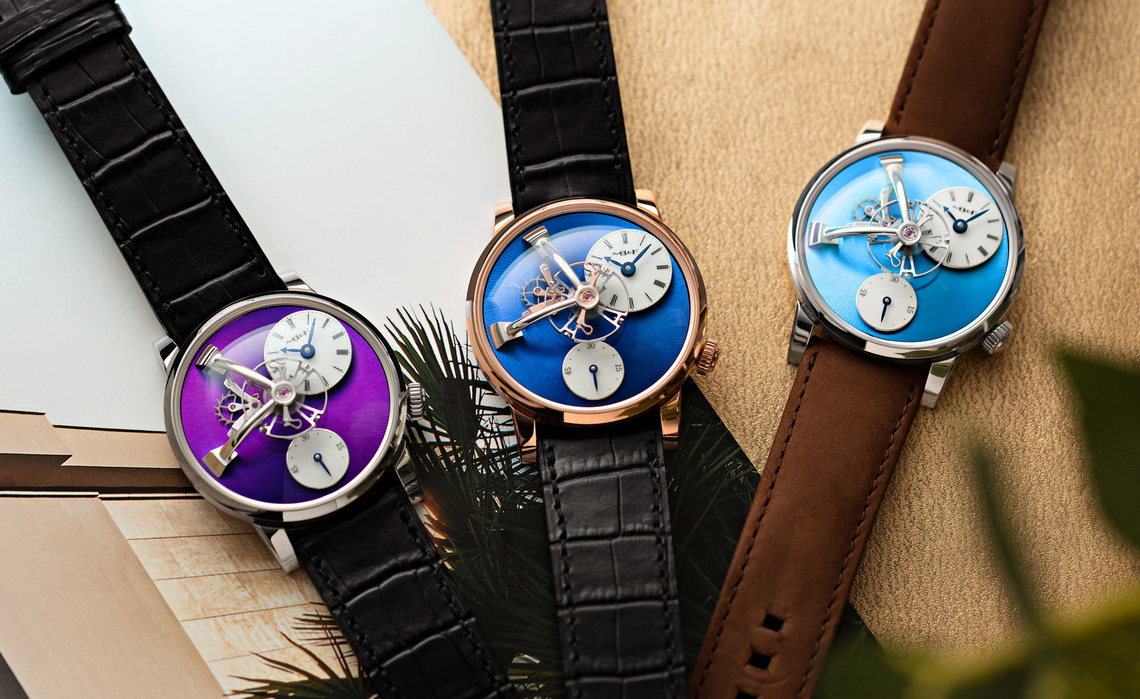
Maximilian Büsser's atelier has spent twenty years redefining what a wristwatch can even look like. The Horological Machines, the Legacy Machines, the Co-Creations with independent makers — MB&F treats the wristwatch as a medium rather than a category. Büsser's own line says it best: at MB&F they create Machines that happen to tell the time, not to tell the time. They are three-dimensional kinetic sculpture first, horology second.
But the Machines are only part of it. In 2011, MB&F opened the M.A.D. Gallery on Rue Verdaine in Geneva's old town — a few steps from the MB&F workshops. M.A.D. stands for Mechanical Art Devices, and the gallery is exactly that: a curated universe of kinetic art from around the world, alongside the full MB&F collection. Frank Buchwald's Machine Lights from Berlin. Xia Hang's stainless-steel transformer sculptures. The hand-blown hourglasses by Marc Newson. Bob Potts's hand-built kinetic statues from upstate New York. Server Demirtaş's Desiring Machines, robotic figures whose 80 synchronized movements personify the human condition. Jennifer Townley's geometric mechanical sculptures, where cogwheels dissolve cubes into diamonds. Nothing in the gallery is mass-produced. Most of it is for sale. All of it shares the conviction that the moment a mechanism transcends its practical purpose, it becomes art. If the rest of the Quartet honors what watchmaking has been, MB&F insists on what it could become — and the M.A.D. Gallery is the proof that the conversation extends well beyond the wrist.
Heritage matters. So does showing up. So does making something new.