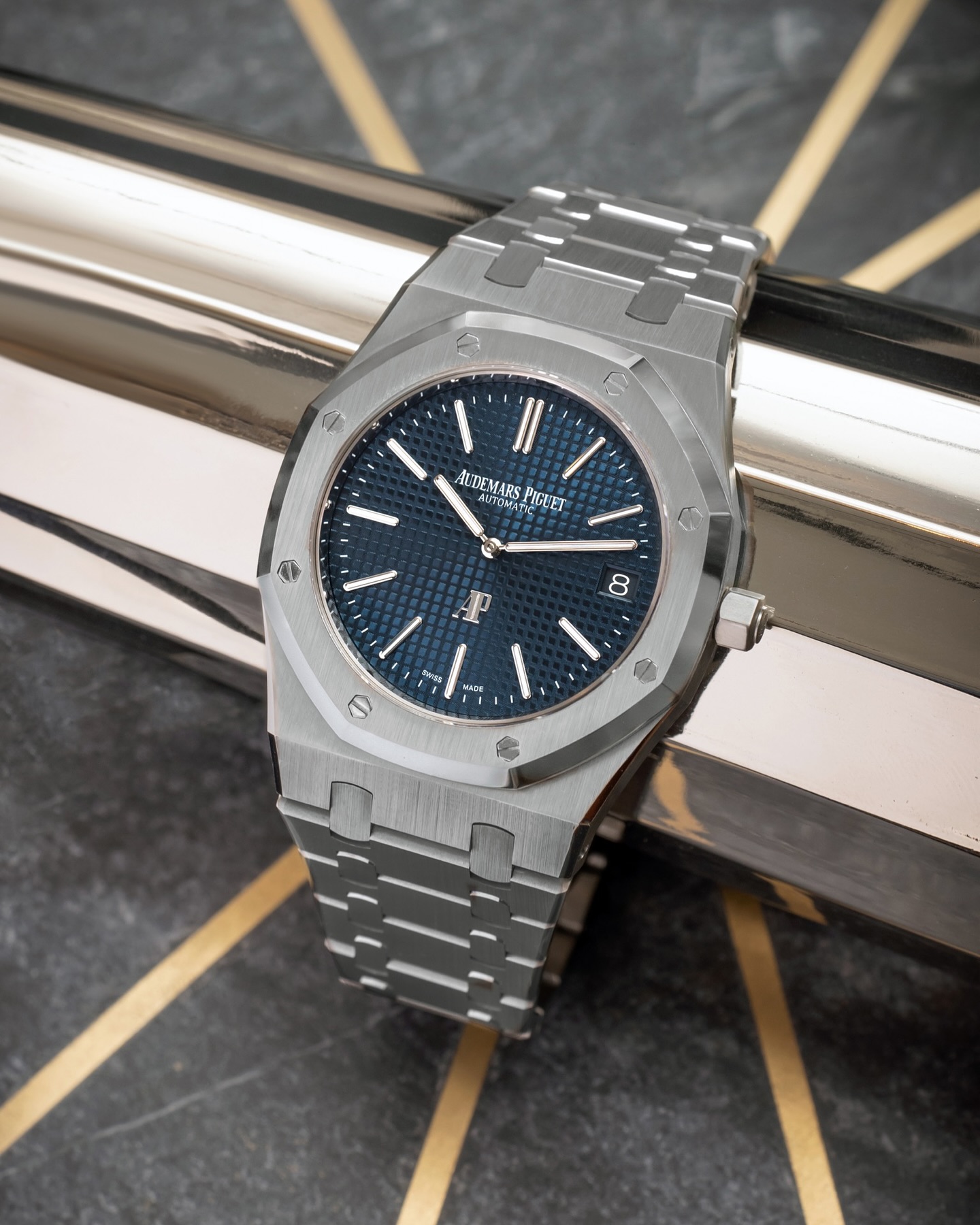
The hype was the market’s fault, not theirs. They are now trapped in it.
Patek Philippe: a 150-reference complications house, hyped on one steel watch
Patek Philippe (founded Geneva, 1839) describes itself, on patek.com, as a house of “more than 150 references, spanning 10 major collections and equipped with one of our fifty in-house movements.” Annual production: 60,000–70,000 watches. For 186 years the identity has been complications and dress watches: minute repeaters, perpetual calendars, world timers, the Calatrava. At Watches & Wonders 2026 — the Nautilus’s 50th anniversary year — Patek launched 20 pieces. The headlines: the Minute Repeater Calatrava 7047G (CHF 205,000), the split-seconds chronograph perpetual calendar 5204G-010 (CHF 304,700), the Cubitus Perpetual Calendar 5840P-001 (CHF 150,000), and a mechanical automaton. The three Nautilus anniversary pieces were the obligation. Around 2017 the public hyped the brand on the one watch it least identifies with: a time-only steel sports watch under USD 30,000, the Nautilus 5711, designed by an outsider (Genta) in 1976. Patek didn’t ask for it, benefited from it, but would prefer to sell you the CHF 304,700 split-seconds perpetual — or at minimum a CHF 40,000 Calatrava.
Audemars Piguet: in even deeper trouble than Patek
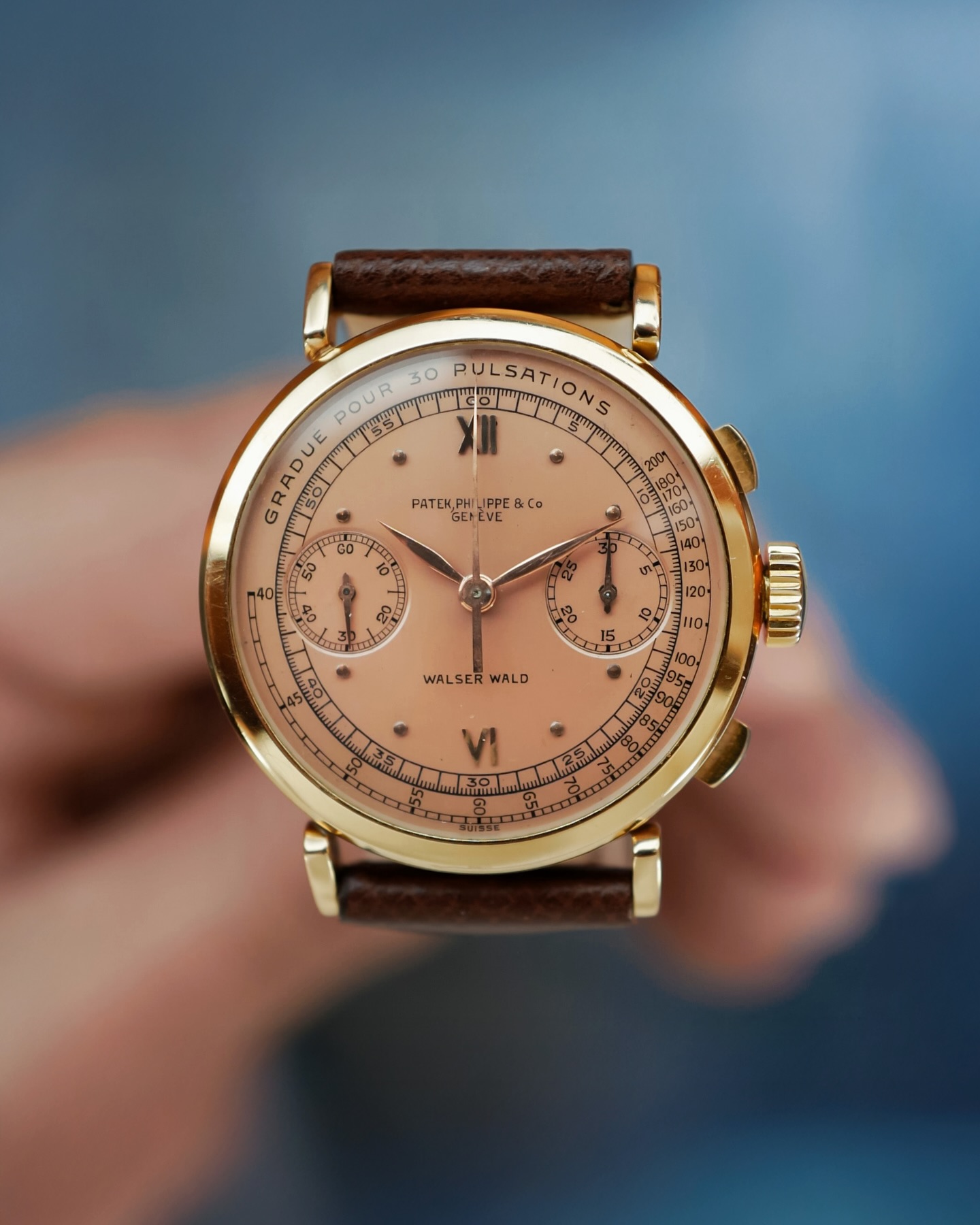
Audemars Piguet (founded Le Brassus, 1875) has a sharper problem. Per industry analyst Oliver Müller (LuxConsult/Morgan Stanley), about 90% of AP’s revenue comes from the Royal Oak and Royal Oak Offshore. The Code 11.59, launched in 2019 to diversify, was 5% of sales by 2022, ~15% by 2023, targeted for 20% by 2025. Total output is ~50,000 watches a year; the cap per reference is 1,450, just 1,000 for the most desirable like the steel Royal Oak Jumbo blue dial. The maths is the trap. If AP increases Royal Oak production to meet the waitlist, secondary market premiums collapse — and the premium is what makes the watch desirable. Existing collectors who paid USD 30,000+ over retail get burned. Brand equity erodes. AP’s only options are: hold production constant and raise retail prices; or use the Royal Oak allocation as bait to push Code 11.59 and Offshore to first-time buyers. They do both. A walk-in asking for a USD 100,000+ perpetual calendar Royal Oak is told, before any conversation about money, that they need a Code 11.59 purchase history first. Asking about a frosted gold Royal Oak as a first watch tends to be met with quiet incredulity.
What it looks like in the boutique
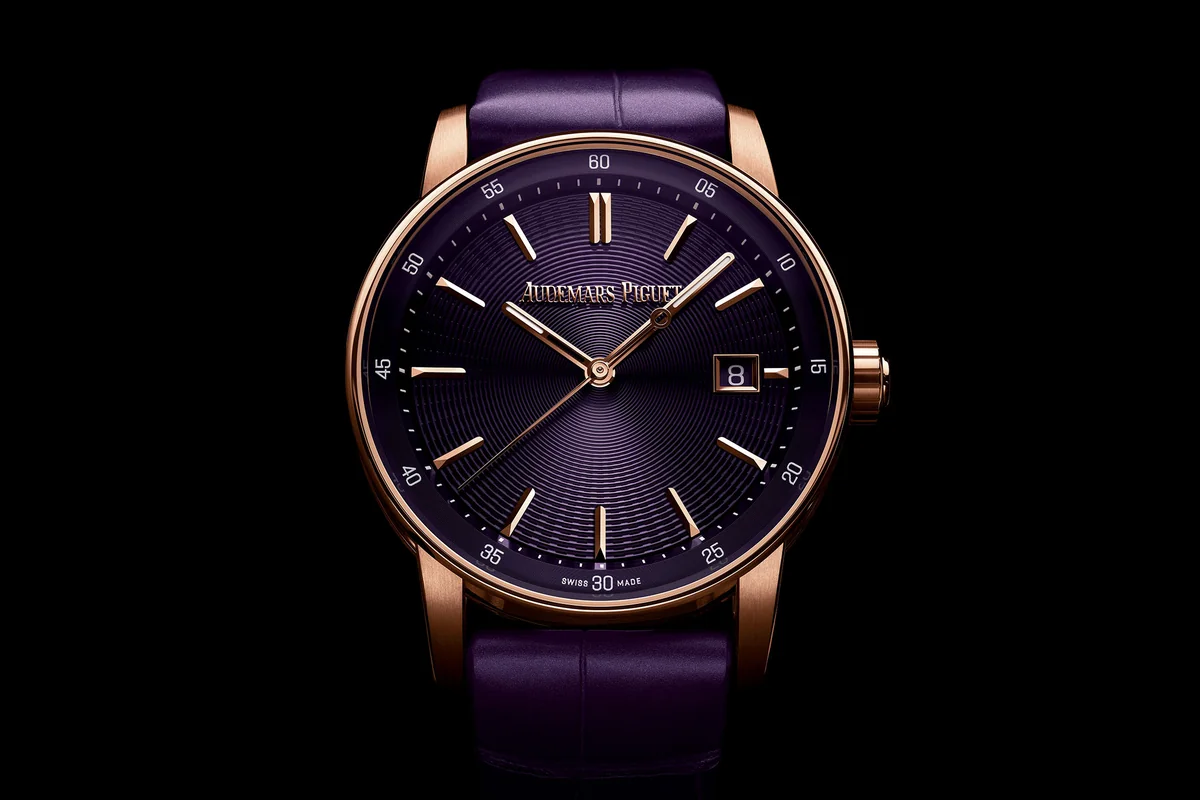
Inside a Patek salon, a relationship manager explains that a CHF 90,000 platinum Nautilus is sold only to clients with a 30-year purchase history who have spent millions across the catalogue — and that selling them the watch is, in the manager’s actual phrasing, “a way to say thank you,” as if the CHF 90,000 were a gift. The implicit pivot is to a complicated piece, or to a CHF 40,000 Calatrava with a multi-year wait that nobody quite explains, because everyone knows Patek is not running out of Calatravas. At AP the script is more direct: the Royal Oak is not available to a first-time buyer at any price; the Code 11.59 is. Both scripts are rational from the brand’s side — protecting brand equity, protecting existing owners’ resale, redirecting demand to where they want to grow. From the customer’s side it reads as humiliation: you walked in to spend six figures, you left being told that wasn’t the right watch for someone like you.

The self-fulfilling prophecy
The system is degrading the very products the brands push as the alternative. Every time a buyer is forced into a Code 11.59 or a Calatrava to qualify for a Royal Oak or a Nautilus, the same thing happens later: the moment the buyer gets the watch they actually wanted, the initiation piece goes on the secondary market. The data is now unambiguous. Per the Morgan Stanley / WatchCharts Q2 2025 report, the Code 11.59 trades at 33% below retail, with discounting up 21% over the prior year. The Royal Oak Offshore trades at 23% below retail. The Calatrava 5227J in yellow gold trades at 42.6% below retail (USD 27,143 secondary against USD 47,262 retail), per WatchCharts — at a time when in-production Patek watches trade, on average, 22.6% above retail. The steel Royal Oak by contrast still carries a 24% premium. Each cycle reinforces itself: forced sales push secondary prices down; lower secondary prices make the watch less desirable; less desirability makes the next first-time buyer more reluctant to accept the same trade; the brand has to lean harder on the allocation lever to move the inventory; more forced sales follow. AP and Patek are devaluing the very tools they use to manage demand for their hot pieces — and they cannot stop without abandoning the allocation system itself.
Whose fault is this?
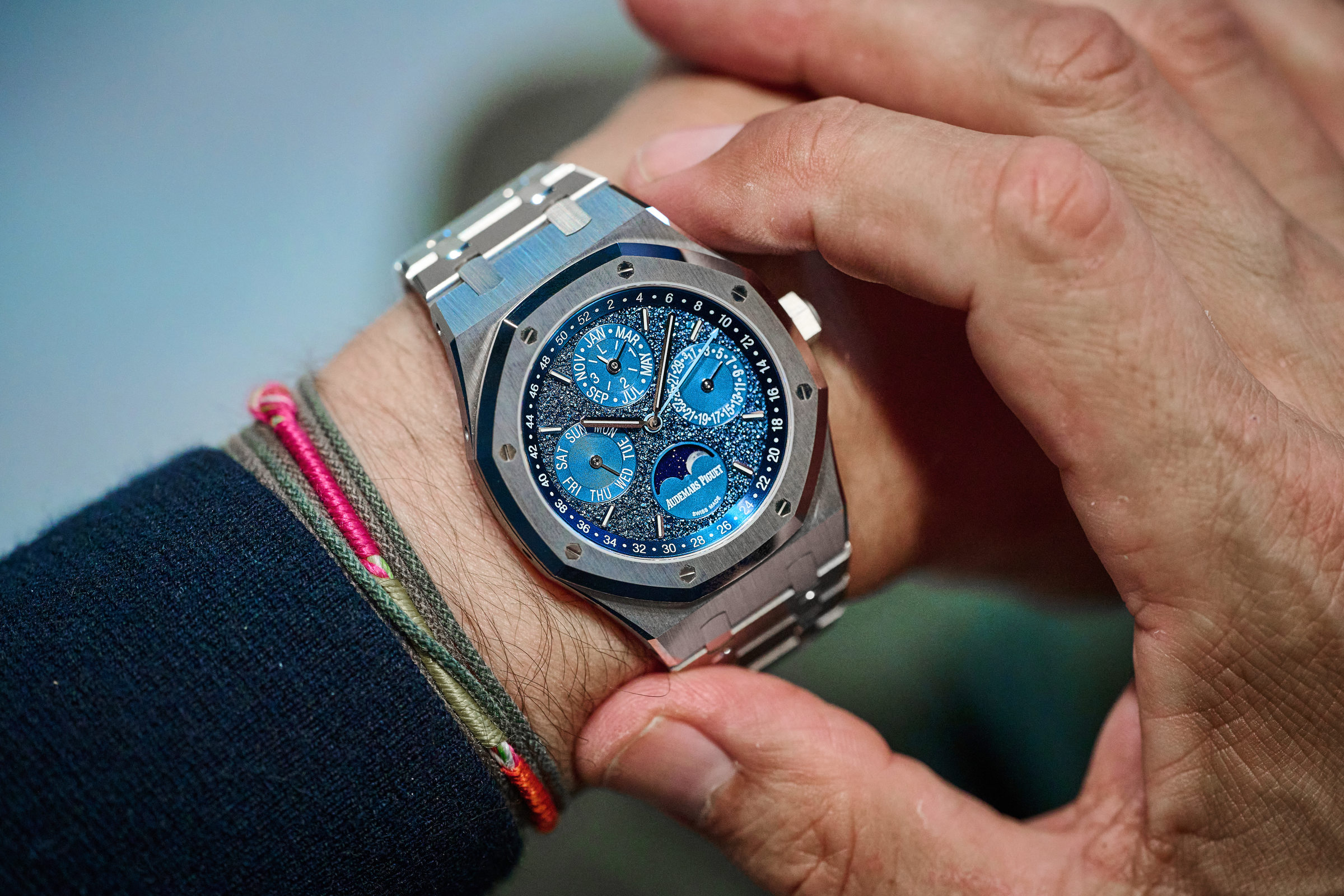
Not really theirs. Patek is a complications house hyped on a steel sports watch it never expected to define it. AP is a 150-year-old maison whose commercial existence now depends on a single 1972 design line. The fault lies with the market — with collectors and influencers who, somewhere in the mid-2010s, decided that out of two of the deepest catalogues in haute horlogerie, the only watches worth wanting were the steel sports pieces. Patek and AP did not create this. They benefit from it, manage it, and to some extent are imprisoned by it. Rolex, where the brand really did engineer the scarcity, is a different story — and one for a future article.