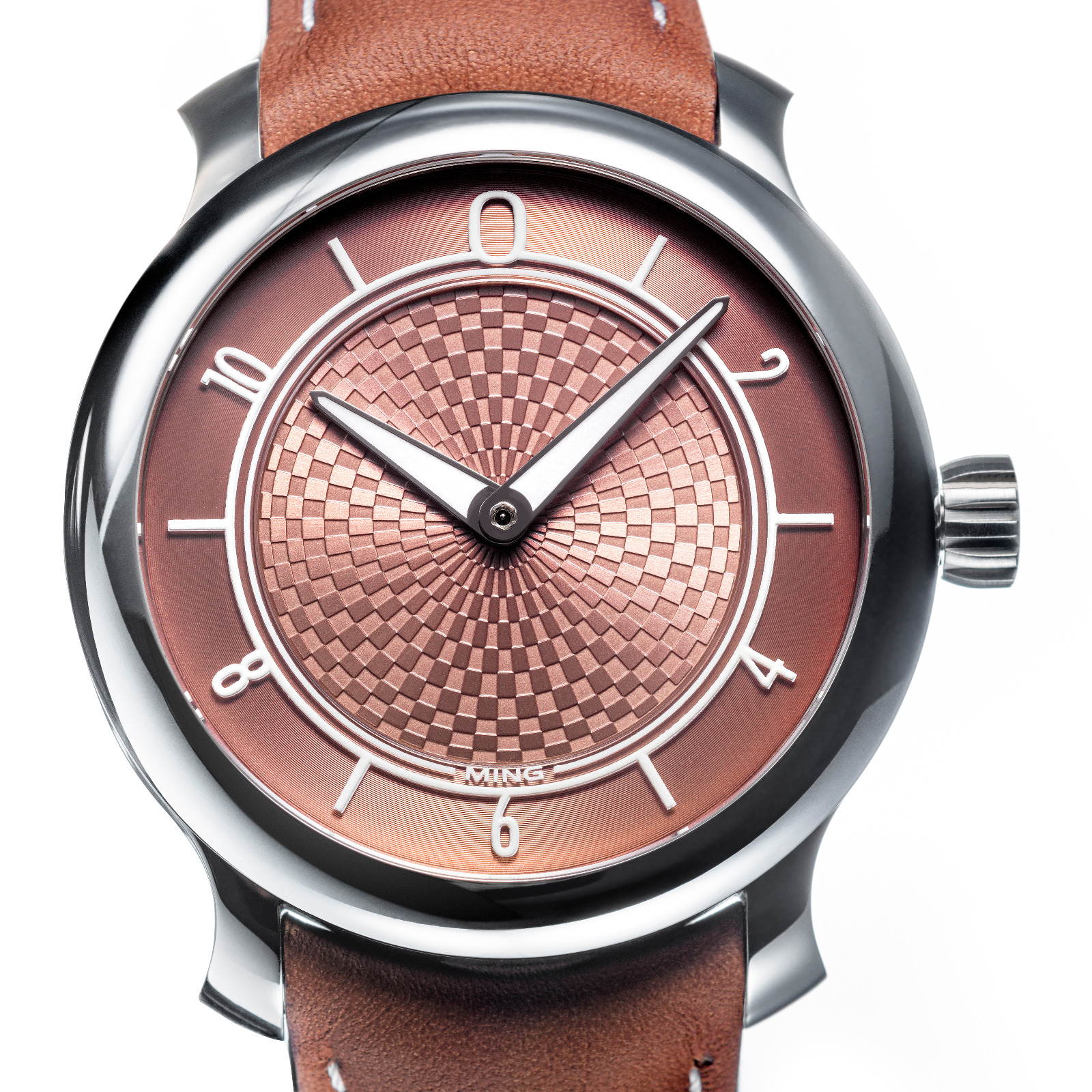
Ming Thein — Malaysian, theoretical physics at Oxford at 16, ex-auditor, ex-Hasselblad strategy chief, then full-time photographer — sat on a return flight from a 2014 watch fair with five collector friends and complained that the watches they wanted didn’t exist. Three years of work later, in August 2017, the first watch came out: the Ming 17.01, a 38 mm grade-5 titanium time-only piece with a domed sapphire crystal, layered dial, flared lugs, and a luminous ring etched into the underside of the crystal. Around USD 900. It sold out instantly. In 2019 the brand won the GPHG “Horological Revelation” prize for the 17.06 Copper, with an acid-etched multi-level guilloché copper dial. By 2026 the brand has shipped roughly 15,000 watches across 75 references and is a founding member of the Alternative Horological Alliance.
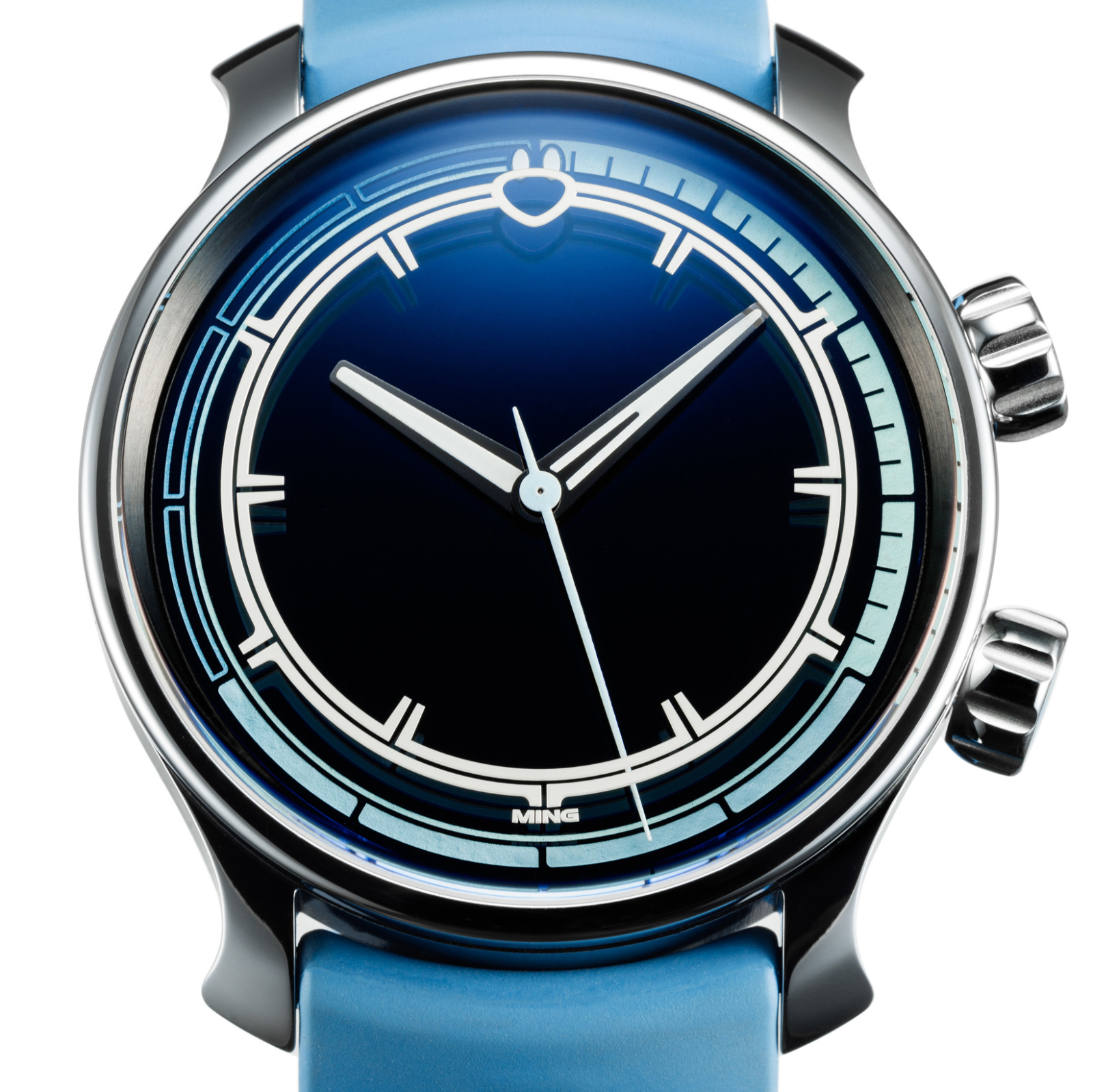
Designed in Kuala Lumpur, made in Switzerland
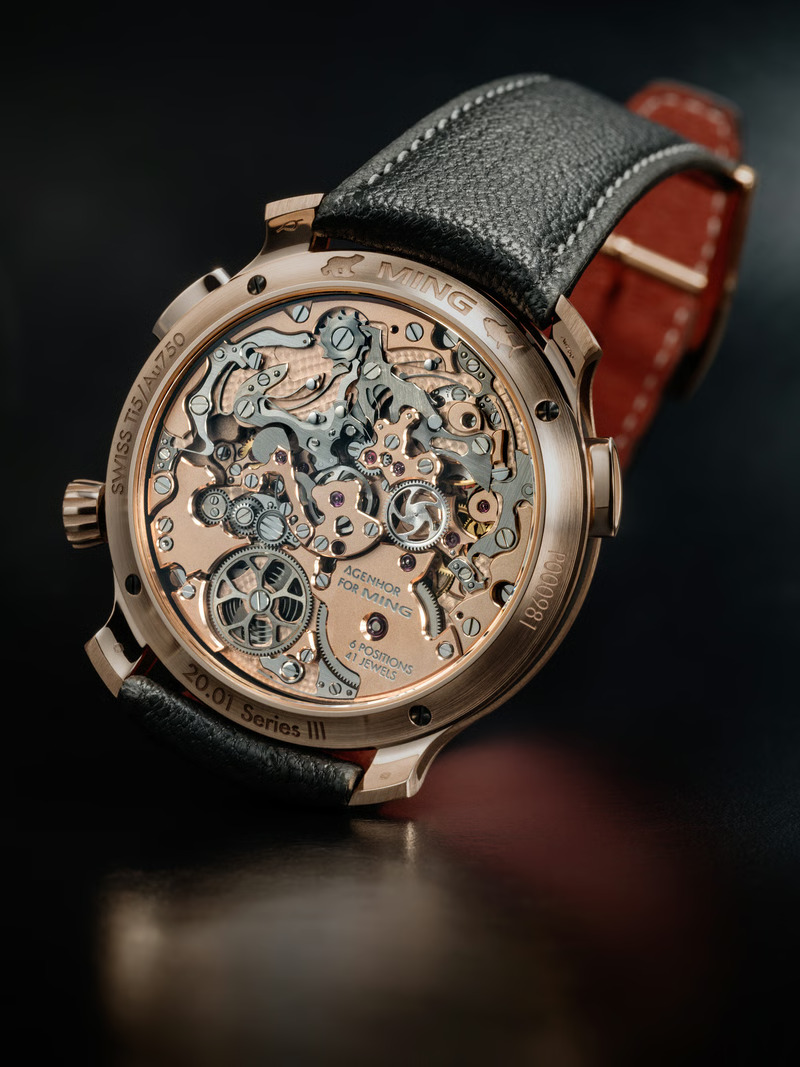
Ming has never had a manufacture. The whole brand is a network: design and creative direction in Kuala Lumpur, then production farmed out to curated Swiss partners — Sellita and Agenhor for movements, Manufacture Schwarz-Etienne for construction and assembly, DM Surfaces for dials, Jean Rousseau for straps, Studio Koji Sato for pouches. The Sellita movements are reworked into MING-specific calibers; the AgenGraphe used in the top-tier pieces is Jean-Marc Wiederrecht’s central-chronograph architecture, arguably the most sophisticated chronograph movement in production today. Because final assembly happens in Kuala Lumpur, Ming watches cannot technically carry the “Swiss Made” label, an irritation the brand is now addressing by opening its own Swiss facility. The trade-off is the value proposition: a Ming offers movement-finishing, case construction, and dial work that would cost three to four times more at a vertically integrated maison.
The collection structure
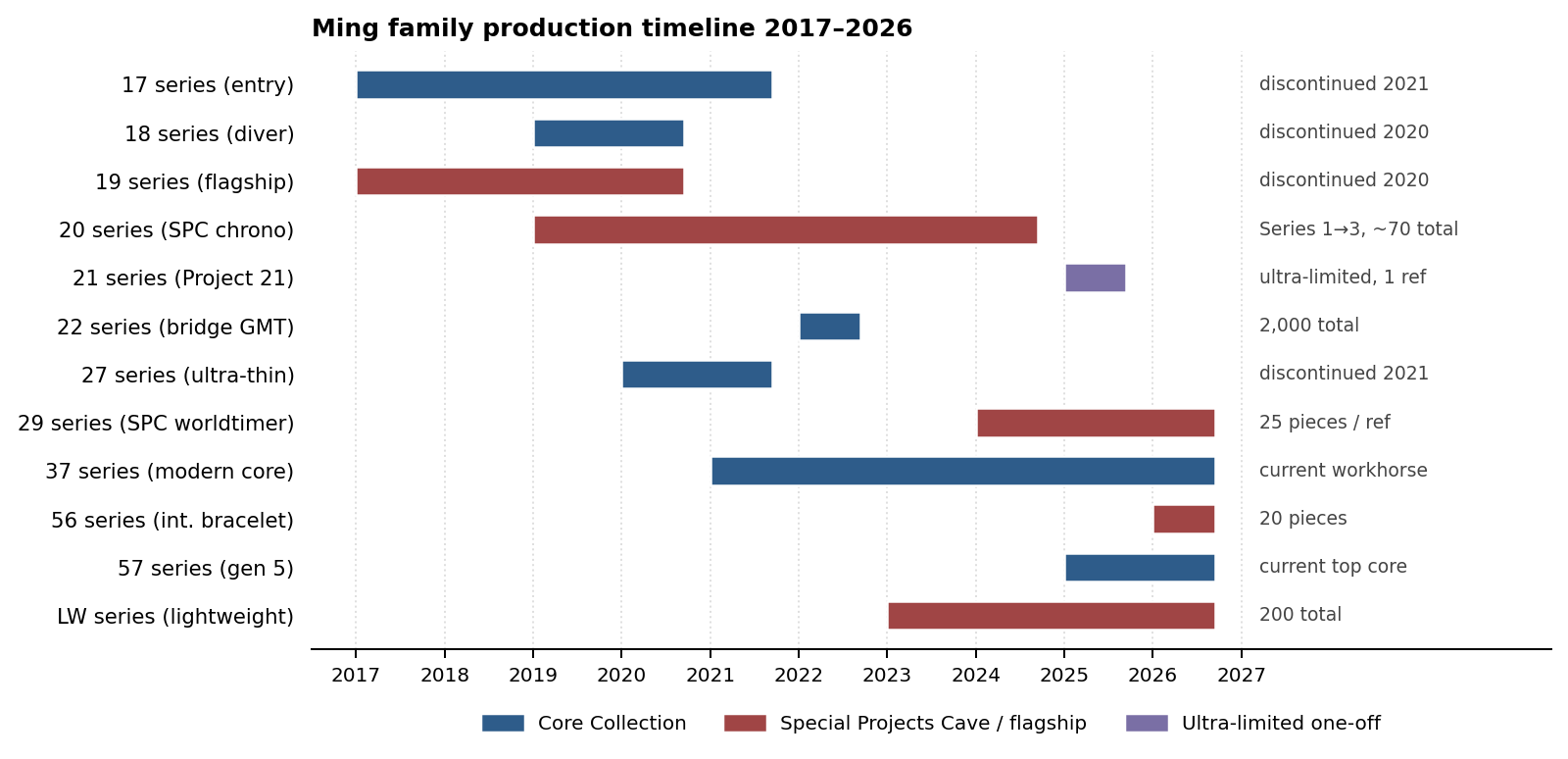
Ming organises its catalogue across numbered case-family series, split into two tiers: the Core Collection (general releases, CHF 3,250–7,500) and the Special Projects Cave (haute-horlogerie tier, CHF 19,500–60,000, runs of 10–25 pieces). Every reference, once built, is retired permanently — the brand’s online archive is now longer than the live catalogue. Most case families have run for one to four years before being retired and replaced. Only the 37 series has had genuine continuity since 2021.
Limited-edition mechanics are central. The 17 series ran four years before being retired with the 17.09 in 2021 (2,000 total pieces split 45/55 between burgundy and blue). The 17.06 Copper produced 300 pieces per year for two years; the 17.06 Monolith 125 per year. The 22.01 GMT was deliberately scaled up to 2,000 pieces (1,000 per dial colour) to address ordering frustrations after prior models sold out in minutes. The 18.01 diver and 19 flagship lines each lasted under two years. The 20-series Special Projects Cave chronograph spans Series 1 (50 pieces), Series 2 (50 pieces), Series 3 (20 pieces). The 29.01 worldtimer is 25 pieces per reference. The 56.00 Starfield integrated-bracelet debut is 20 pieces. The 21.01 Project 21 is a single ultra-limited reference Ming Thein designed as his personal dream watch. The 37 series is the exception that proves the rule — five years of continuous production, the broadest range of complications (Minimalist, Moonphase, monopusher chronograph, divers, aventurine dials), and the only Ming reference (37.02 Minimalist, 2024) explicitly sold without a production cap.
Latest releases (2025–2026)
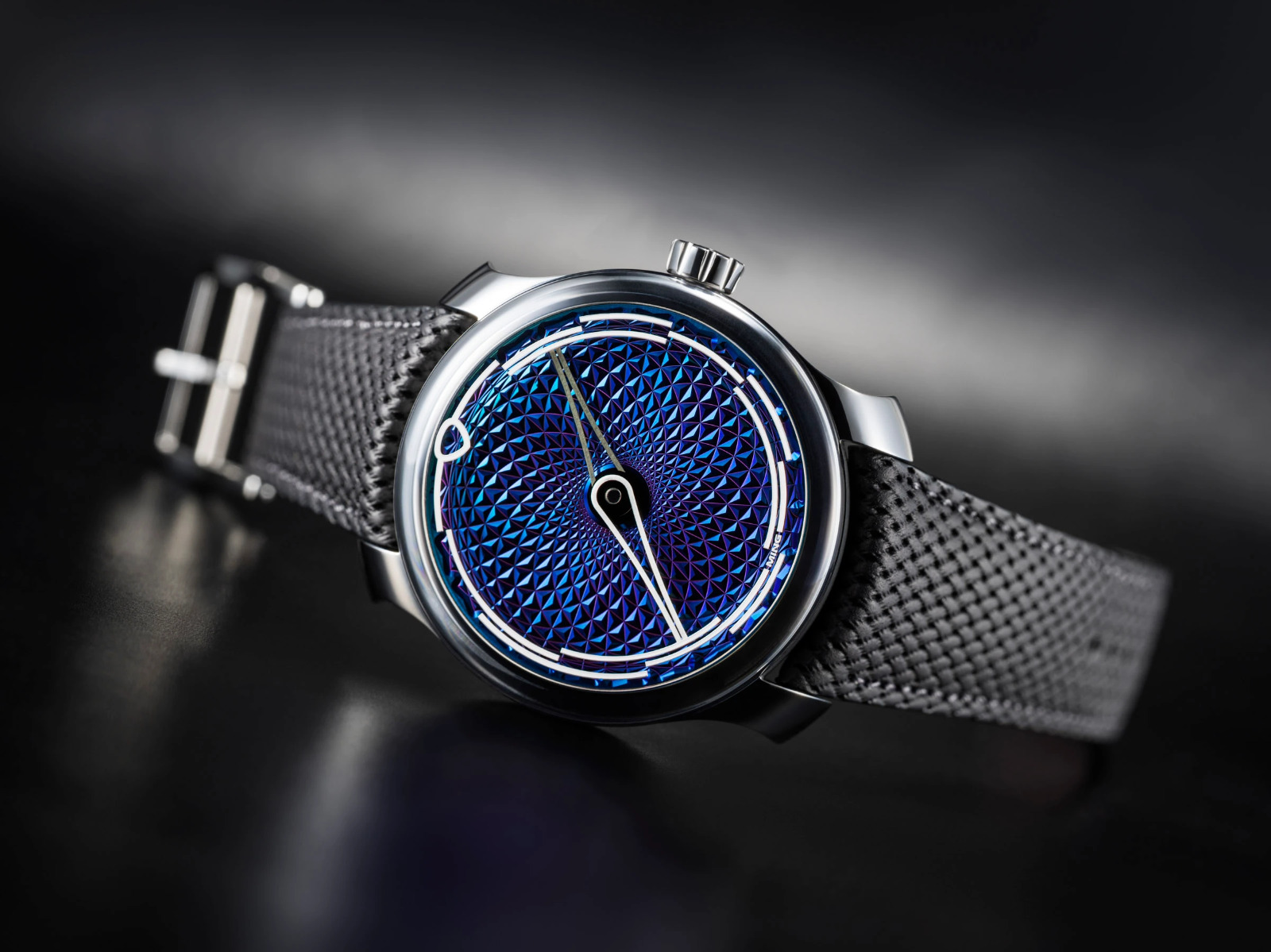
The flagship release is the 57.04 Iris (August 2025, 100 pieces): a destro monopusher chronograph with left-side crown, 40 × 11.85 mm steel, three-level stepped lugs, iridescent multiphasic dial. In March 2026 came the 57.04 Phoenix (CHF 6,250 on rubber, CHF 7,250 on Polymesh 3D-printed titanium bracelet, 150 pieces), a more restrained sibling with the multiphasic coating moved beneath a grey dial with radial cutouts. The 56.00 Starfield (late 2025) was the brand’s first integrated bracelet. The 29.01 Midnight (CHF 22,000, 25 pieces) is the worldtimer in black DLC. The 20.01 Series 3 (CHF 43,500, 20 pieces) uses the AgenGraphe with the first-ever fused borosilicate dial. The 37 series continues to expand: 37.05 Moonphase, 37.08 Starlight/Twilight (aventurine), 37.09 Bluefin/Uni (600 m divers), 37.11 Odyssey (titanium diver). The Phoenix is the easiest current entry; the 20.01 S3 and 29.01 Midnight are the haute-horlogerie pieces.
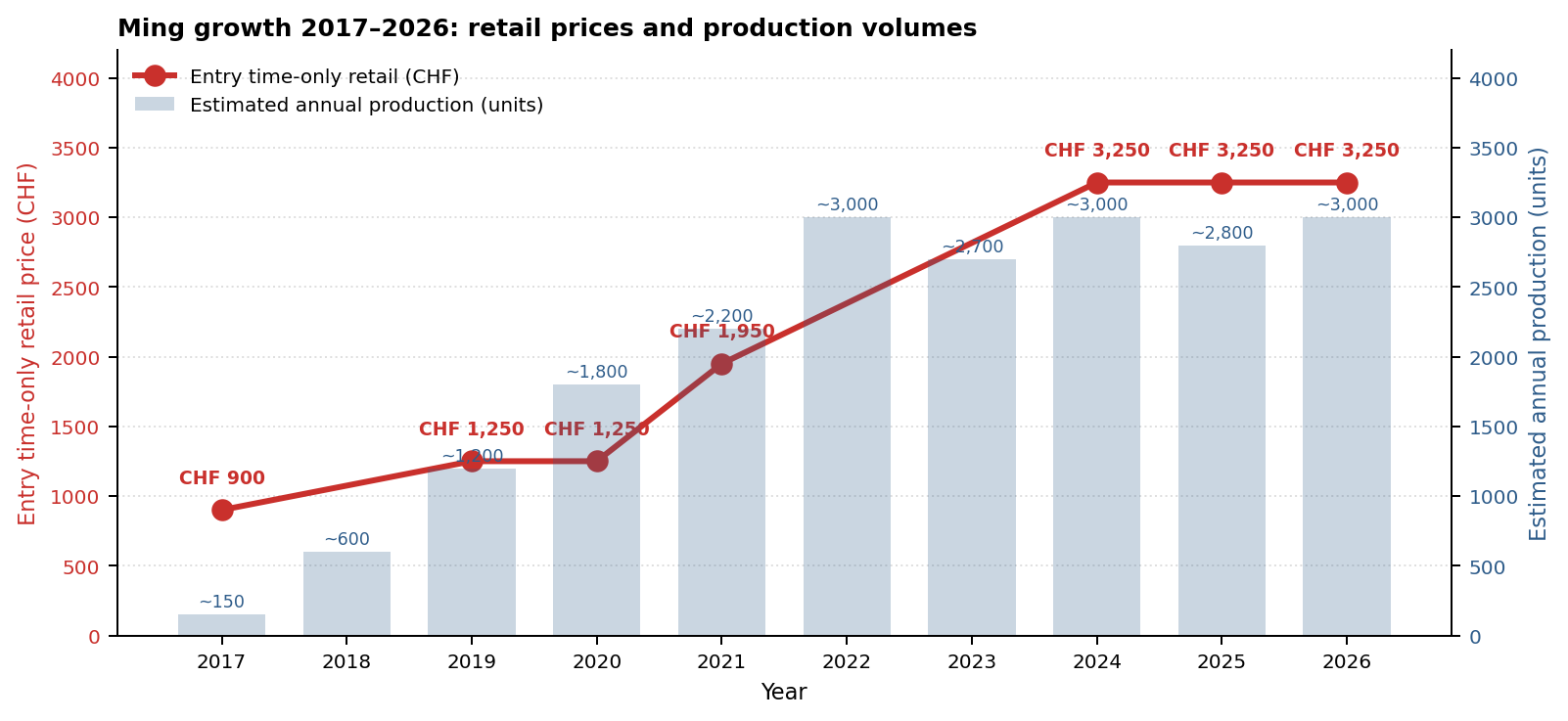
Growth: prices and volumes (2017–2026)
The entry time-only price has risen from CHF 900 (17.01, 2017) to CHF 3,250 (37.02 Minimalist, 2024) — a 3.6× increase across seven years, roughly 20% compounded annually. The jumps line up with discrete product upgrades, not steady creep: 17.01 to 17.06 (steel case, sapphire markers, GPHG win) +39%; 17.06 to 17.09 (Design Language 2 sapphire indices) +56%; 17.09 to 37.02 (customised Sellita SW300.M1, Polar White lume, opening of Horologer MING SA in La Chaux-de-Fonds) +67%. Production volumes have risen even more steeply — from 150 watches in 2017 to an estimated ~3,000 a year today.
For context, ~15,000 cumulative Mings is less than Rolex produces in a single week, and the brand’s current annual output is what Rolex makes in roughly two and a half hours. Within independent watchmaking, Ming sits between the haute horlogerie houses (MB&F ~300/year, Greubel Forsey ~120/year, F.P. Journe ~900/year) and the larger independents (A. Lange & Söhne ~5,000/year, Richard Mille ~5,300/year). The original CHF 900 Ming is permanently behind us; the best-value current entry is the 57.04 Phoenix at CHF 6,250 — a monopusher chronograph that would have been Special Projects Cave territory in 2022 and is now Core Collection.
Where Ming sits now
Ming is no longer the CHF 900 oddity that arrived in 2017. Prices have run ahead of the brand’s founding thesis — that the watches collectors wanted didn’t exist at sensible money — and the entry point has moved from approachable curiosity to considered purchase. The 57.04 Phoenix at CHF 6,250 is strong value for what’s inside the case. It is also not what Ming Thein described from a return flight in 2014.
What hasn’t changed is the design discipline. Across nine years and 75 references the language is consistent enough that a Ming is recognisable across a room — a claim very few independents can make, and one no Swiss brand at this annual volume can. The new La Chaux-de-Fonds facility will resolve the Swiss-Made footnote. It will also test whether a network brand designed in Kuala Lumpur and assembled by Manufacture Schwarz-Etienne can remain itself once final assembly comes in-house.
For now, Ming is the most coherent design voice in independent watchmaking under CHF 10,000, and the only brand at its scale that treats each case family as a finite project rather than a permanent SKU. Whether that holds as the catalogue moves further upmarket is what we’ll be watching.