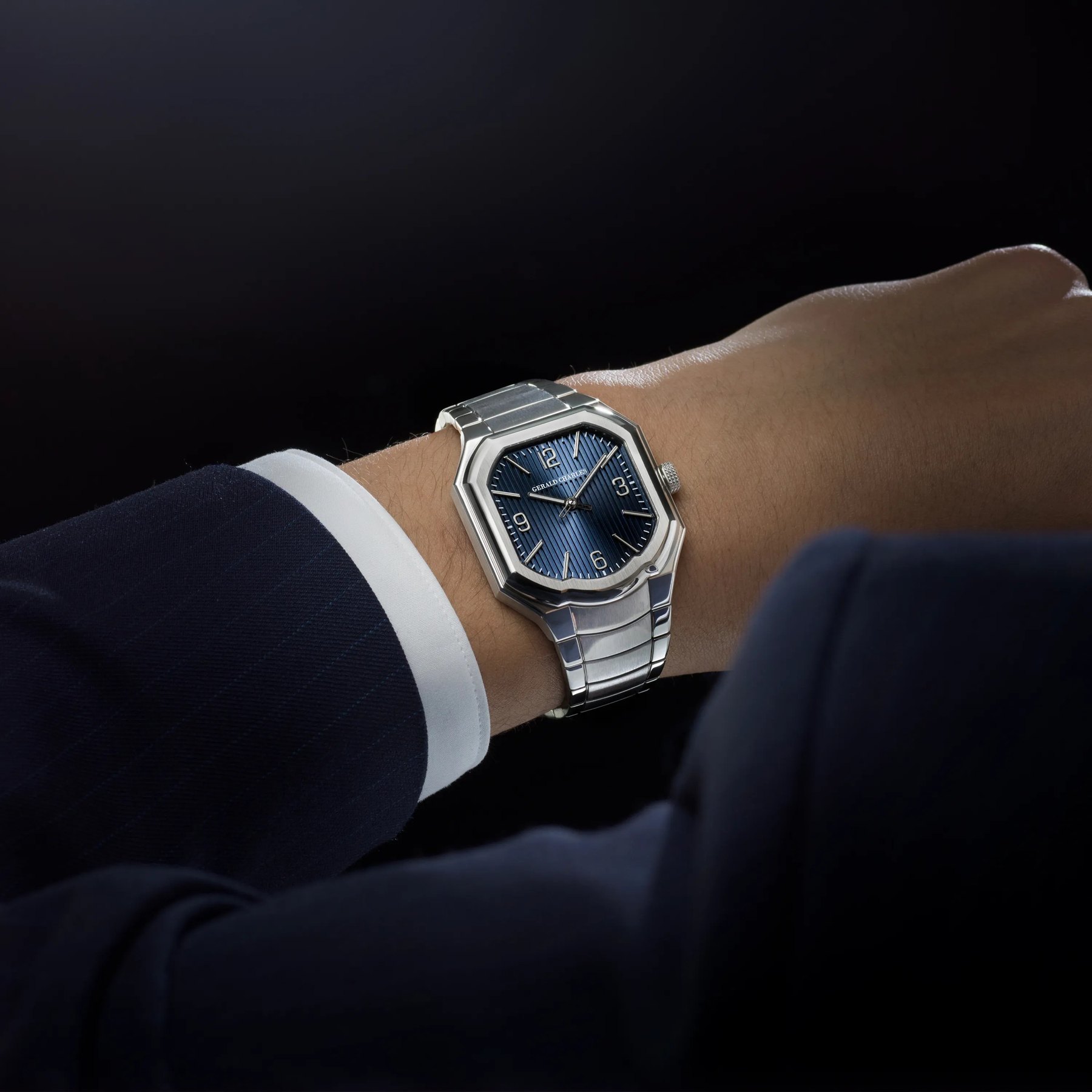
The integrated-bracelet steel sports watch is the most hyped category in modern watchmaking. The Nautilus, Royal Oak and Aquanaut all trade well above retail — they are not value plays, they are scarcity premiums. But the broader category contains serious manufactures whose watches, lacking the Genta-pedigree mystique, depreciate on the secondary market. Same in-house movements, same finishing, same architectural intent — at a fraction of the price. These are the four best, and they share something the hot pieces don’t: all four are independent, family- or foundation-owned houses producing most of what’s on the wrist themselves.
Parmigiani Fleurier Tonda PF Automatic Steel (ref. PFC804-1020005-100182)
Launched: 2021 (Tonda PF line, alongside Parmigiani’s 25th anniversary). Dimensions: 40 mm × 7.8 mm thick — one of the thinnest automatic sports watches on the market. Secondary market: ~$14,000–$16,500 / CHF 11,000–13,000 (retail $21,500 / CHF 17,000).
The collection. Parmigiani is one of the few genuinely vertically integrated independents in Switzerland. Founded in 1996 by master restorer Michel Parmigiani in the village of Fleurier and backed by the Sandoz Family Foundation, the house owns its escapement maker (Atokalpa), its movement manufacture (Vaucher), and its case and dial workshops (Quadrance et Habillage, Les Artisans Boîtiers). Vaucher, the movement arm, is so respected that Hermès bought 25% of it in 2006; it also supplies movements to Richard Mille, Czapek and a handful of others — a small list of clients who can afford that level of finishing. Patek is not on the list, because Patek runs the same playbook internally.
The Tonda PF is the flagship of the line under CEO Guido Terreni, who arrived from Bulgari in 2021 and has pushed the brand toward what he calls “private luxury”: no celebrity ambassadors, no event sponsorships, no fashion-week spectacle — visibility traded for the kind of long-term collector relationships LVMH and Richemont can’t replicate at their scale. The watch itself is the proof of concept: a steel case with a hand-knurled platinum bezel, an in-house micro-rotor caliber (PF770) and a hand-guilloché Grain d’Orge dial. Finishing belongs in the same conversation as the Trinity; the price doesn’t.
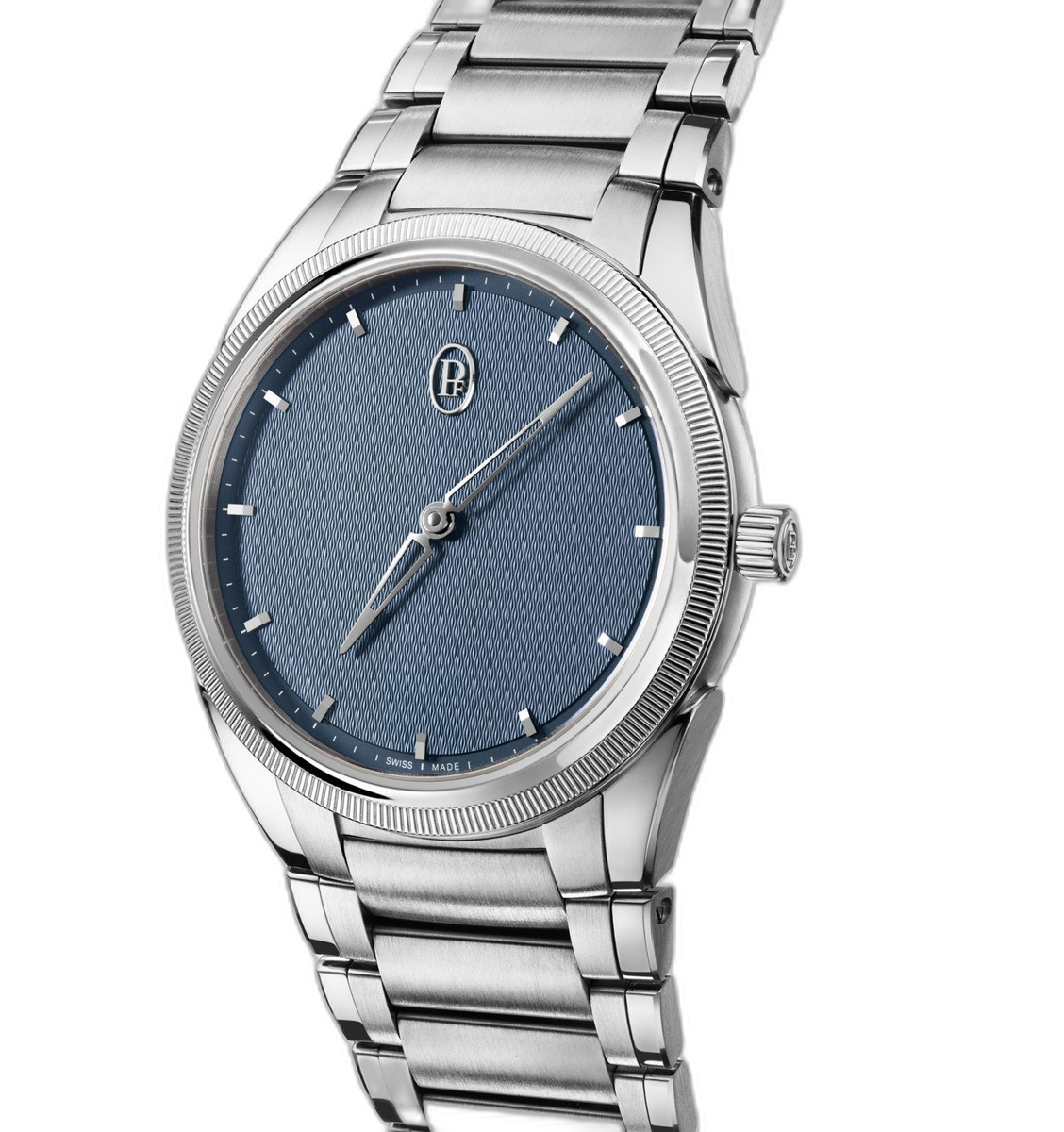
Why it’s a deal. Trading 25–35% below retail despite being among the most finely finished watches in this category — Trinity-level movement decoration, platinum components, and a slimness even the AP Royal Oak Jumbo Extra-Thin can’t quite match. Parmigiani lacks brand recognition outside enthusiast circles, which is exactly where mispricing lives. If the Tonda PF were stamped “Vacheron” on the dial, it would trade at $35,000+ / CHF 27,000+.
Gerald Charles Masterlink (ref. ML1.0-A-01 / A-18)
Launched: April 2024 (Watches & Wonders), Gerald Charles’ first ever integrated-bracelet watch. Dimensions: 38 mm × 38 mm × 7.99 mm thick — among the thinnest in the entire category. Secondary market: ~$16,700–$21,800 / CHF 13,000–17,000 (retail $25,800 / CHF 20,100).
The collection. Gerald Charles is the brand founded by Gérald Genta himself in 2000, after he sold his original eponymous brand to Bulgari and walked away with the freedom to build something at his own scale. The second act of the man who designed the Royal Oak, Nautilus and IWC Ingenieur SL was deliberately small: Genta partnered with Federico Ziviani (who still runs the company), production has stayed at roughly 2,000 watches a year across all collections, and the brand has remained independent — no group, no investor exit, no diluting of the design language since Genta’s death in 2011. Creative direction now sits with Octavio Garcia, who spent fifteen years at Audemars Piguet as head of design (the Concept Watch and Royal Oak Offshore overhaul are his); movements are supplied by Vaucher in Fleurier — high-end Swiss, the same shop that builds for Hermès and Richard Mille.
The Masterlink reworks Genta’s 2006 Maestro case — an asymmetric hexagon with a “smile” curve at 6 o’clock — into an integrated-bracelet sports watch. Caliber GCA 5401 is a Vaucher-built micro-rotor automatic just 2.67 mm thick, with the rose-gold rotor visible through a smoked sapphire caseback.
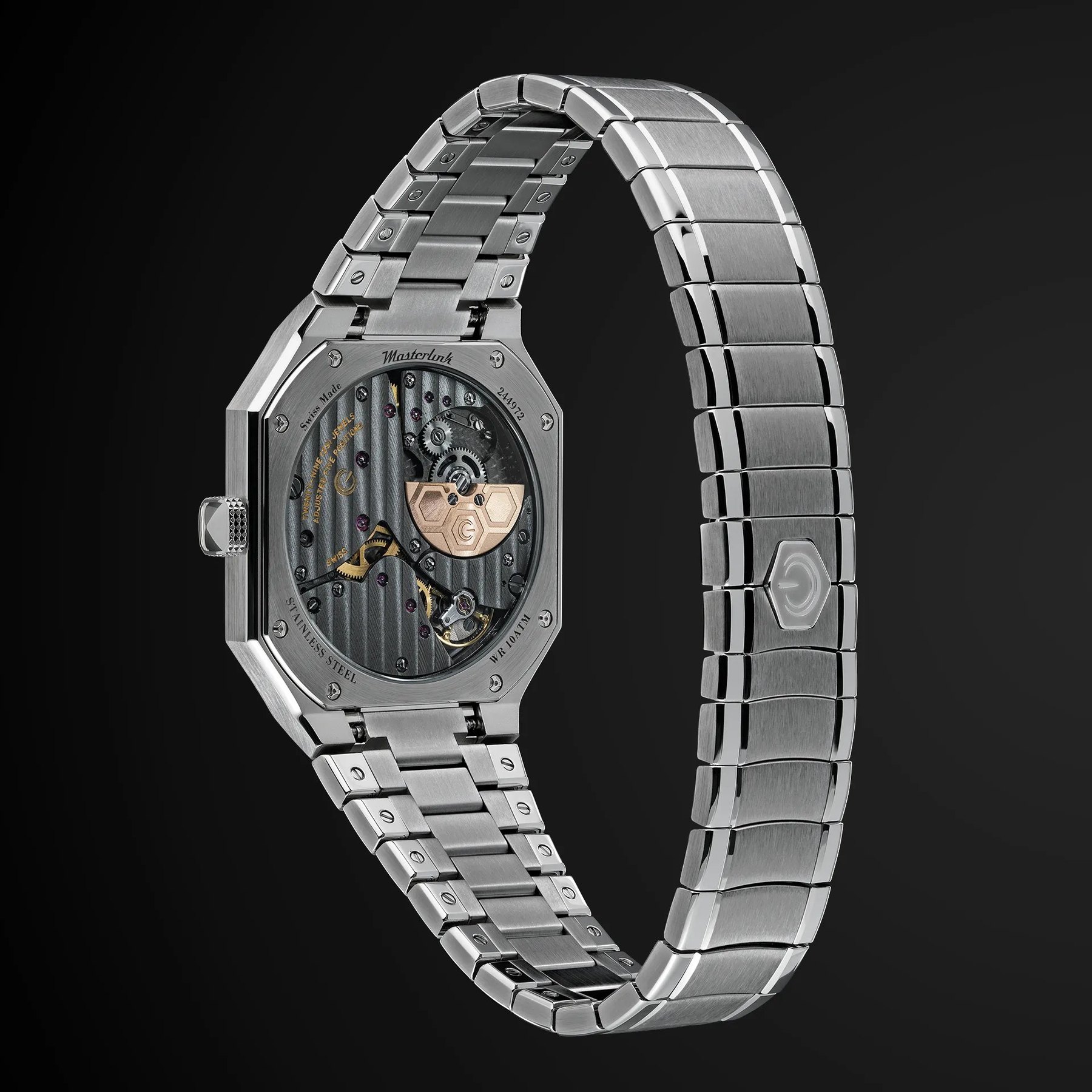
Why it’s a deal. This is the most authentic Genta-DNA play available today — not a homage to a Genta design, but a watch from Genta’s actual company, by an ex-AP designer who spent a decade and a half drawing inside Genta’s most famous creation. At 2,000 pieces a year across the whole catalogue, finding one on the secondary market at 30–35% off retail is a quiet arbitrage few collectors are tracking. A steel Royal Oak 15500 trades at $35,000+ / CHF 27,000+; a Nautilus 5811 at $90,000+ / CHF 70,000+. The Masterlink delivers the same designer’s lineage for a fraction of either.
Czapek Antarctique Passage de Drake “Glacier Blue” (ref. 1532-12-RT-P-S)
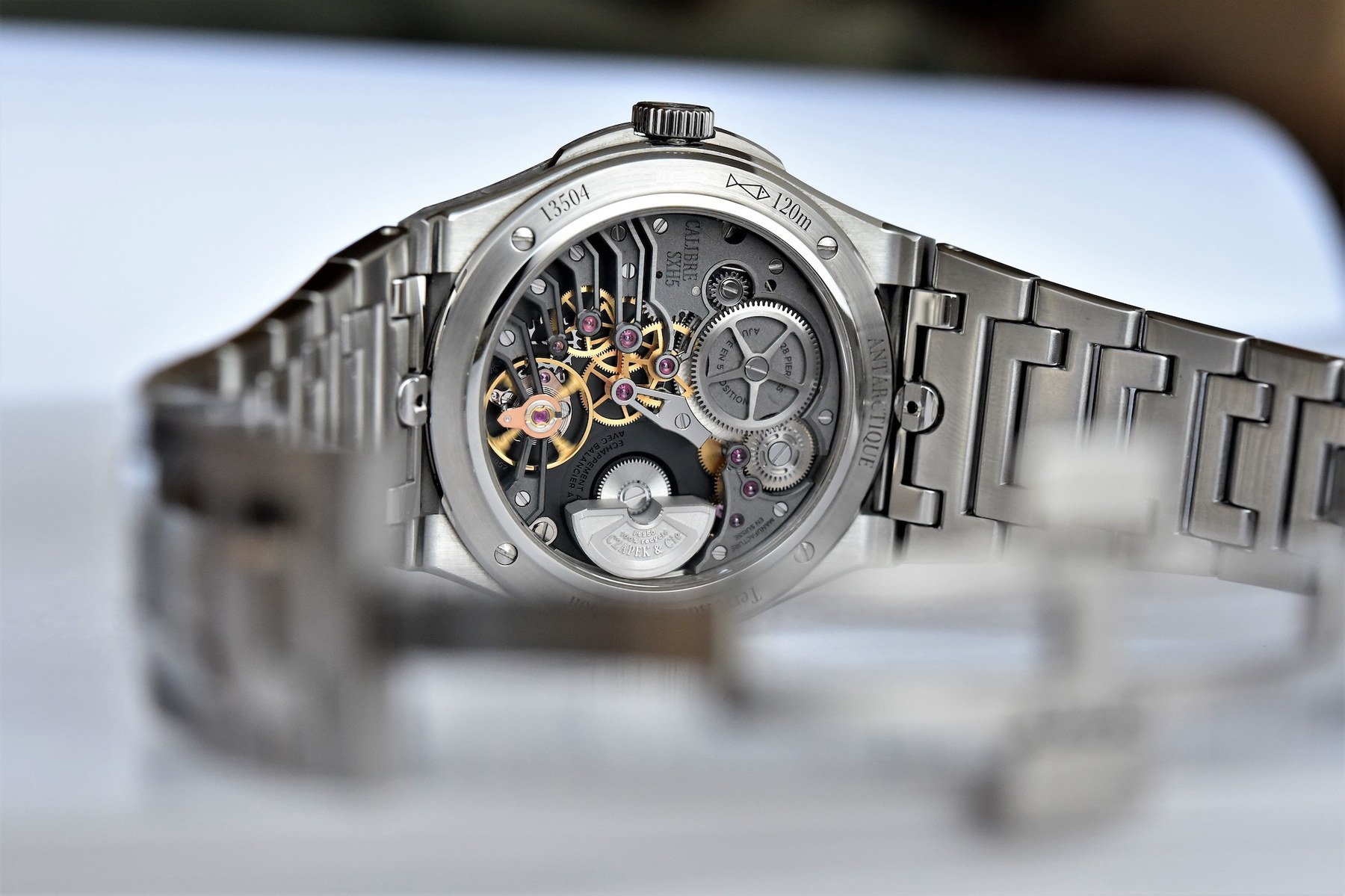
Launched: 2020 (Antarctique line); the Glacier Blue configuration in 2024. Dimensions: 40.5 mm × 10.6 mm thick, steel case with sapphire caseback, 120 m water resistance. Secondary market: ~$15,000–$17,500 / CHF 12,000–14,500 (retail $22,000 / CHF 19,500).
The collection. Czapek has one of the more interesting heritage claims in Geneva. The original house was founded on 1 May 1845 by Franz Czapek, a Polish-Czech master watchmaker who had been Antoine Norbert de Patek’s first business partner — six years before de Patek joined Adrien Philippe to form Patek Philippe in 1851. The original Czapek went bankrupt in 1869 and the name disappeared for 143 years. It was relaunched in 2012 by a group led by Xavier de Roquemaurel through crowdfunding, and has been independent ever since, producing roughly 700 watches a year out of Geneva.
What actually makes the watch interesting isn’t the lineage, though — it’s that Czapek owns Comblémine, one of the most respected guilloché dial workshops in Switzerland (which also supplies dials to outside haute-horlogerie clients), and develops its movements with Jean-François Mojon’s Chronode in Le Locle — the same atelier behind movements for MB&F, Harry Winston and Hautlence. The Antarctique runs the SXH5 caliber: a micro-rotor automatic with platinum micro-rotor (upgraded from the original 18k gold), 60-hour reserve, hand-bevelled bridges, polished countersinks and gold-filled engravings, visible through the sapphire back. The Glacier Blue dial uses the brand’s “Stairway to Eternity” pattern — a stamped vertical guilloché whose three-dimensional surface catches light differently as the wrist moves — with a red tip on the seconds hand and polished inter-links on the H-link bracelet.
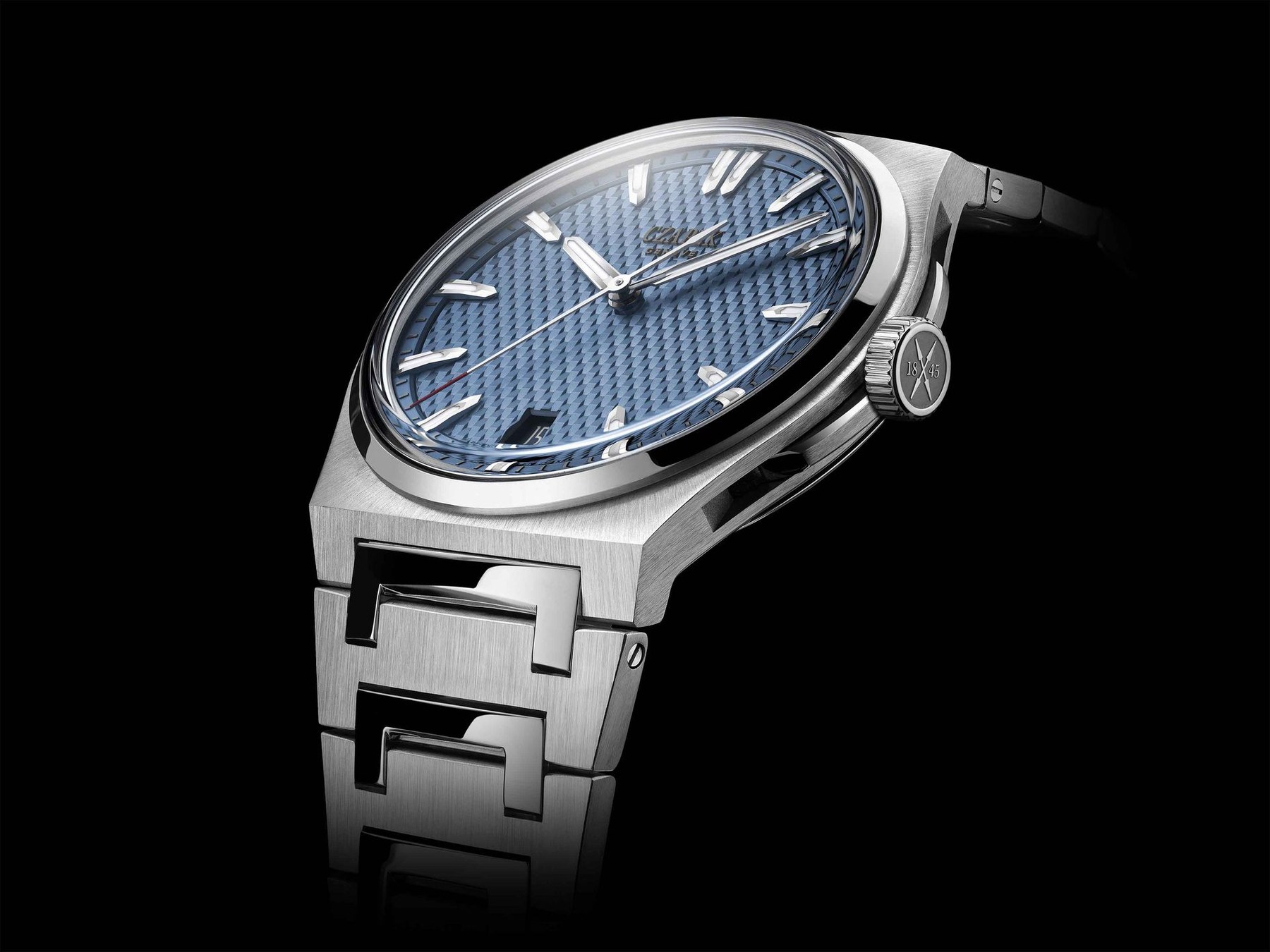
Why it’s a deal. Trading 30–35% below retail despite arguably the most ambitious movement finishing in this category — hand-finishing depth other brands sell at twice the price, from a dial workshop those same brands pay Czapek to use. Production is small enough that the brand sits outside most collectors’ awareness, which is exactly where the mispricing lives. If the dial were stamped “Patek Philippe” or “Vacheron Constantin” instead of “Czapek”, the same watch would sit well north of CHF 30,000.
Chopard Alpine Eagle 41 (ref. 298600-3001 / 3002)
Launched: 2019. Dimensions: 41 mm × 9.75 mm thick × 47.2 mm lug-to-lug. Secondary market: ~$10,500–$12,500 / CHF 8,200–9,800 (retail $17,000 / CHF 13,300).
The collection. Chopard is older than most of its peers — founded 1860 in Sonvilier in the Swiss Jura by Louis-Ulysse Chopard — and has been owned by the Scheufele family since Karl Scheufele III, a third-generation Pforzheim jeweller, bought the dormant maison in 1963. It has never left the family. Karl-Friedrich Scheufele now runs the men’s side; Caroline Scheufele runs the jewellery and women’s collections; the next generation (Karl-Fritz and Karoline) is already inside the company. Chopard’s L.U.C tier — named for the founder — is built in a separate Fleurier manufacture opened in 1996 and produces fully in-house, COSC-certified, often Geneva-Sealed and hand-finished movements that sit comfortably in haute-horlogerie territory.
The Alpine Eagle is Karl-Friedrich Scheufele’s personal project: a 2019 reinterpretation of his father’s 1980 St. Moritz, Chopard’s first steel sports watch. The case is built in Lucent Steel A223, Chopard’s proprietary alloy — brighter than 316L, harder, drawn from roughly 80% recycled steel — and powered by the in-house COSC-certified caliber 01.01-C.
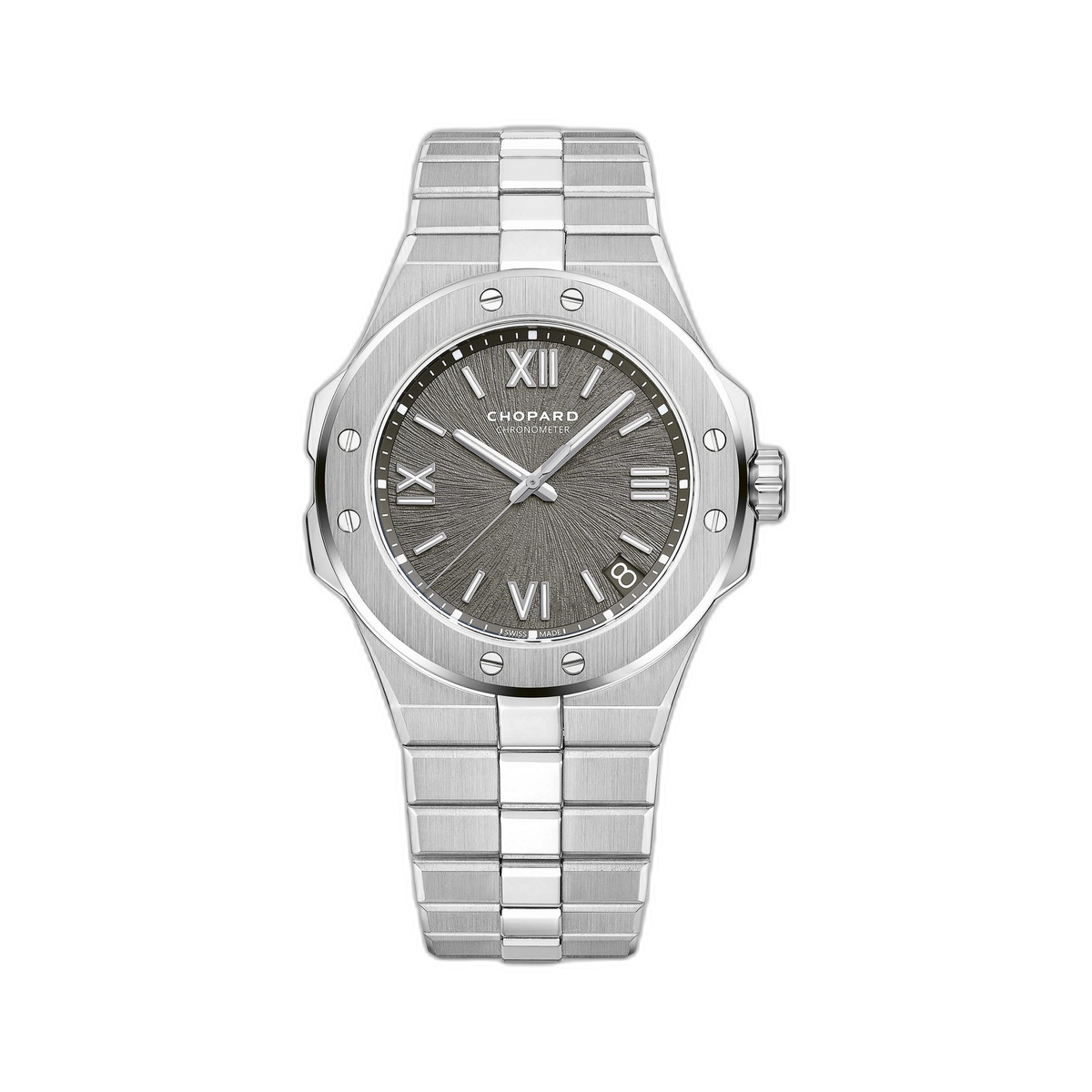
Why it’s a deal. Trading 35–40% below retail despite being arguably the best-executed integrated-bracelet sports watch outside the Trinity. The Lucent Steel finish and iris-textured dial give it more visual character than the AP Royal Oak 15500 it competes with, at a third of the secondary market price. The only thing holding it back is brand prestige, which the market is slowly correcting.
The common thread
Four different ways into the same arbitrage, from four independent houses that own most of what they sell. Parmigiani delivers Trinity-grade finishing under a brand the broader market hasn’t priced correctly; the Masterlink provides authentic Genta lineage at a fraction of what the Royal Oak or Nautilus cost; the Antarctique brings the deepest movement finishing on this list together with original Geneva heritage at a production scale the market hasn’t caught up with; the Chopard offers the best-executed modern entrant at a 1980s heritage price. None will appreciate the way a Nautilus does — but for the buyer who cares about what’s on the wrist rather than what’s trending, all four deliver substantially more watch than their secondary-market price suggests.