The Holy Trinity — Patek Philippe, Audemars Piguet, and Vacheron Constantin — sit at the apex of mechanical watchmaking. Most of their catalogues trade well above any rational definition of “value,” but each brand has references that, due to market sentiment rather than any flaw in the watch itself, can be bought on the secondary market at a meaningful discount.
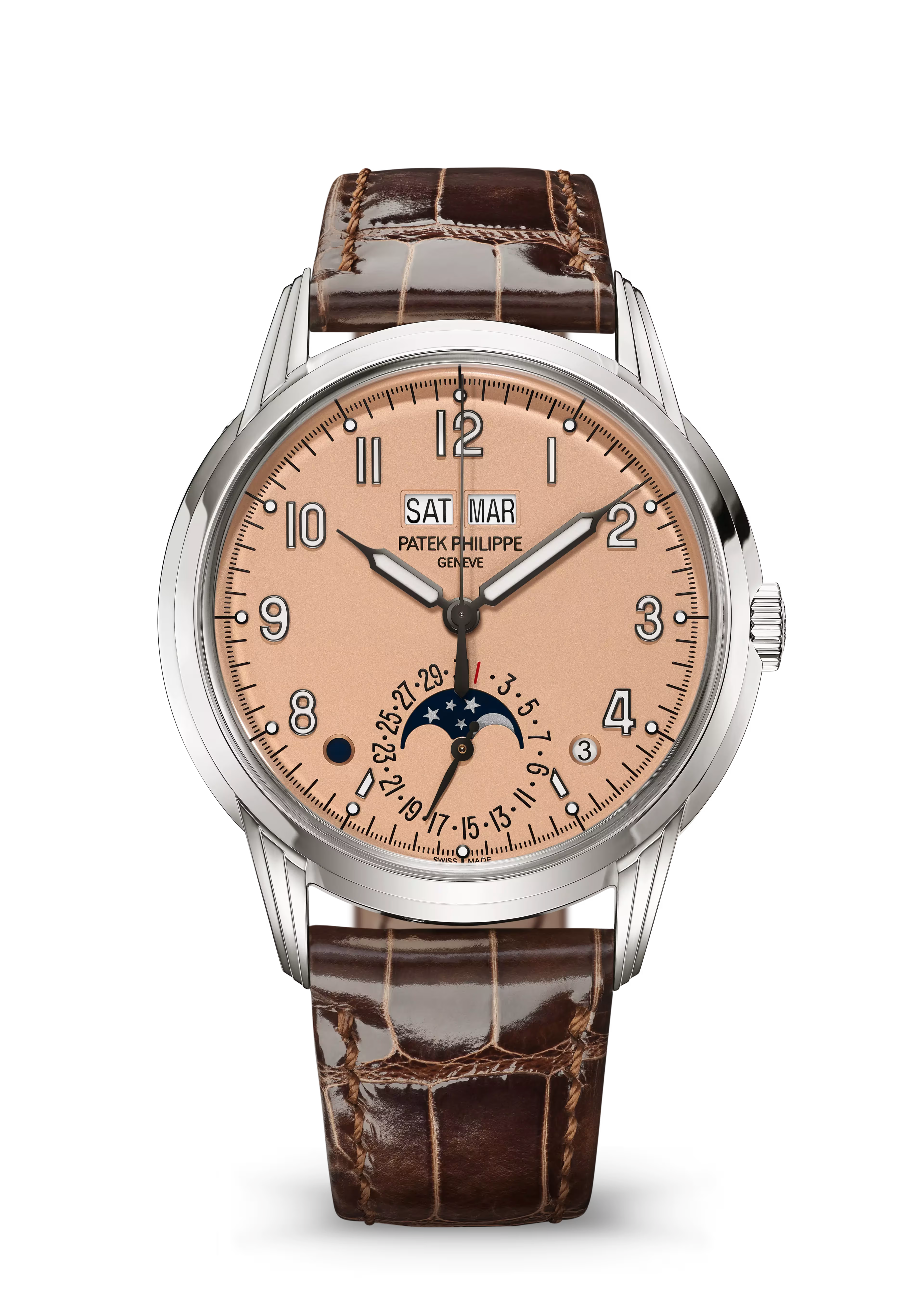
Patek Philippe Perpetual Calendar 5320G-011
Launched: 2017 (Baselworld); the -011 salmon-dial variant in 2022 (Watches & Wonders). Dimensions: 40 mm × 11.13 mm thick × 47.98 mm lug-to-lug, 21 mm lug width. Secondary market: ~$72,000–$90,000 (retail ~$95,000).
The collection. The 5320G sits within Patek’s Grand Complications — the maison’s most technically demanding catalogue, home to perpetual calendars, minute repeaters, split-seconds chronographs and astronomical watches. The in-line day/month aperture and moonphase layout on this reference are direct quotations from refs. 1526 and 2497, and the three-tiered stepped lugs are pulled from the 1940s ref. 2405.
Why it’s a deal. A 40 mm white-gold perpetual with salmon opaline dial and caliber 324 S Q, trading 10–25% below retail. Perpetual calendars don’t generate Nautilus-level hype, and white-gold dress watches lost favour during the steel-sports boom — so you’re getting a full Grand Complication in precious metal for less than what a new Nautilus 5811 fetches on the grey market.
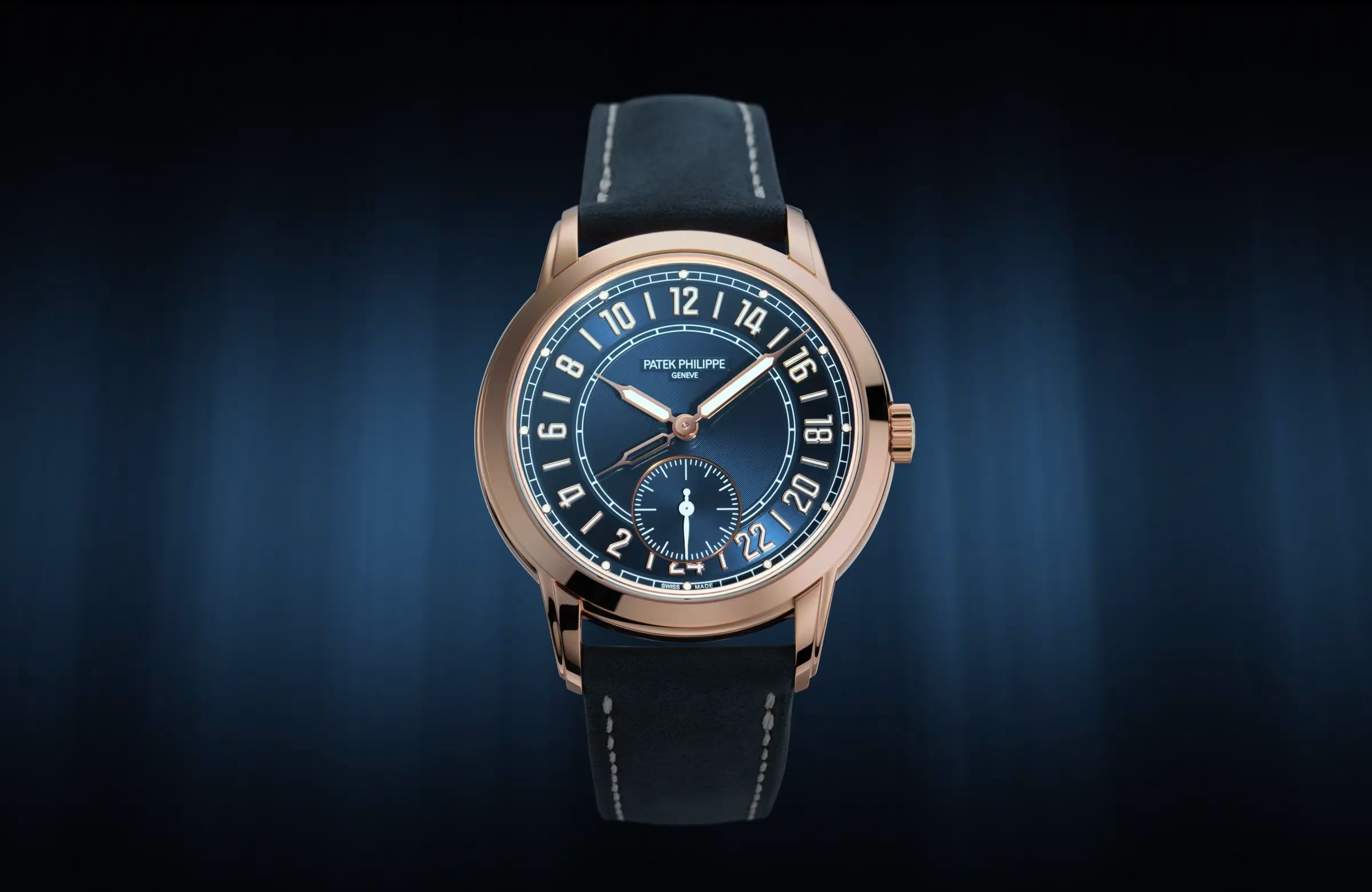
Patek Philippe Calatrava 24-Hour Display Travel Time 5224R-001
Launched: 2023 (Watches & Wonders Geneva). Dimensions: 42 mm × 9.85 mm thick (10.2 mm including domed crystal), 21 mm lug width. Secondary market: ~$42,000–$48,000 (retail ~$67,000).
The collection. The 5224R sits within the Calatrava line — Patek’s prototypical round dress watch — but reimagined as a traveller’s piece. Inspired by the Chronometro Gondolo pocket watches produced from 1905 for Brazilian retailer Gondolo & Labouriau, it carries a true 24-hour central display with noon at 12 o’clock (inverted from convention) for daytime legibility. The case nods to the Calatrava Weekly Calendar ref. 5212A with curved stepped lugs, and Patek’s patented crown-operated correction system has eliminated the traditional pushers on the caseband entirely — pulling the crown to the middle position jumps local time in one-hour increments in either direction.
Why it’s a deal. The 42 mm case runs large by Patek standards, and the 24-hour layout reads as unfamiliar to buyers conditioned on conventional GMTs — both factors have pushed it roughly 30–40% below retail, a discount unusual for an in-production Patek. What you get is the caliber 31-260 PS FUS 24H: a thin micro-rotor movement derived from the ref. 5236P In-Line Perpetual Calendar’s base, with a platinum mini-rotor, 4 Hz Gyromax balance, and Patek Philippe Seal finishing. Mechanically more sophisticated than the older calibres in similarly priced Travel Time references — you’re getting a newer, better-engineered Patek movement in solid rose gold for less than the Annual Calendar Travel Time ref. 5326G retails for.
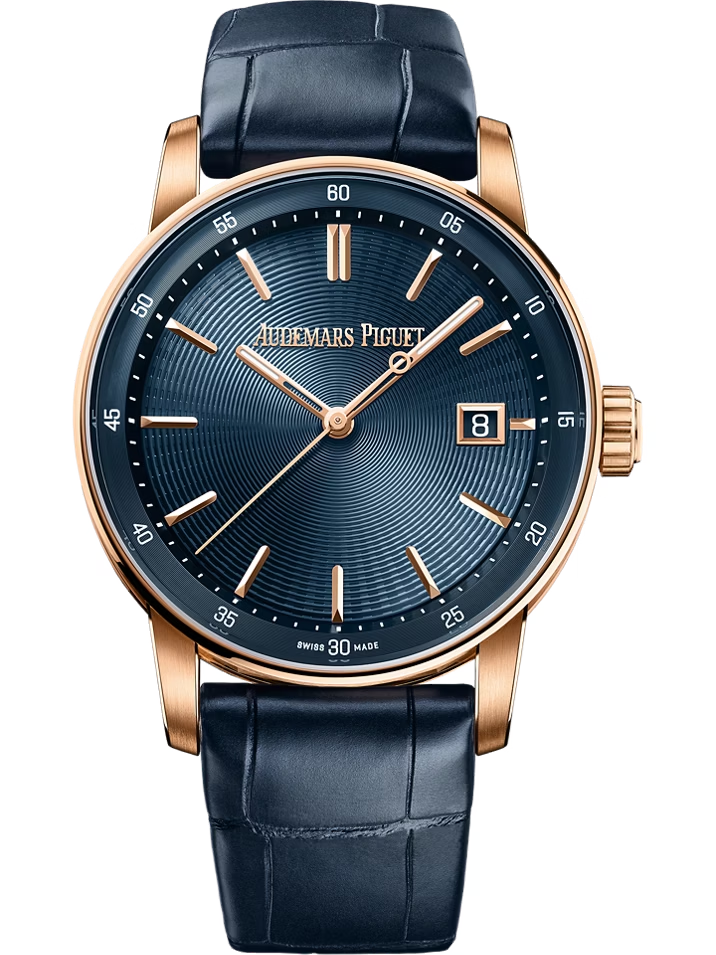
Audemars Piguet Code 11.59 Selfwinding 38 mm Rose Gold (ref. 77410OR)
Launched: Code 11.59 collection in 2019; this 38 mm rose-gold case introduced October 2023. Dimensions: 38 mm × 9.6 mm thick (AP does not publish a lug-to-lug figure due to the floating-lug architecture). Secondary market: ~$22,000–$32,000 (retail ~$37,700).
The collection. Launched in 2019, the Code 11.59 is AP’s third pillar alongside the Royal Oak and Royal Oak Offshore — the brand’s only contemporary round-case collection. Its defining feature is a complex three-part case: a polished round bezel framing an octagonal middle case (a Royal Oak nod), with openworked lugs welded to the bezel that float above the caseback. The 38 mm size launched in 2023 to push the line into proper dress-watch territory.
Why it’s a deal. The Code 11.59 was famously roasted at launch in 2019, and that initial reception still drags on secondary prices — even though the case work is some of the most sophisticated AP produces. Trading 30–40% below retail, you’re getting a solid-gold AP dress watch with in-house movement for less than a steel Royal Oak 15500 — pure brand-narrative arbitrage.
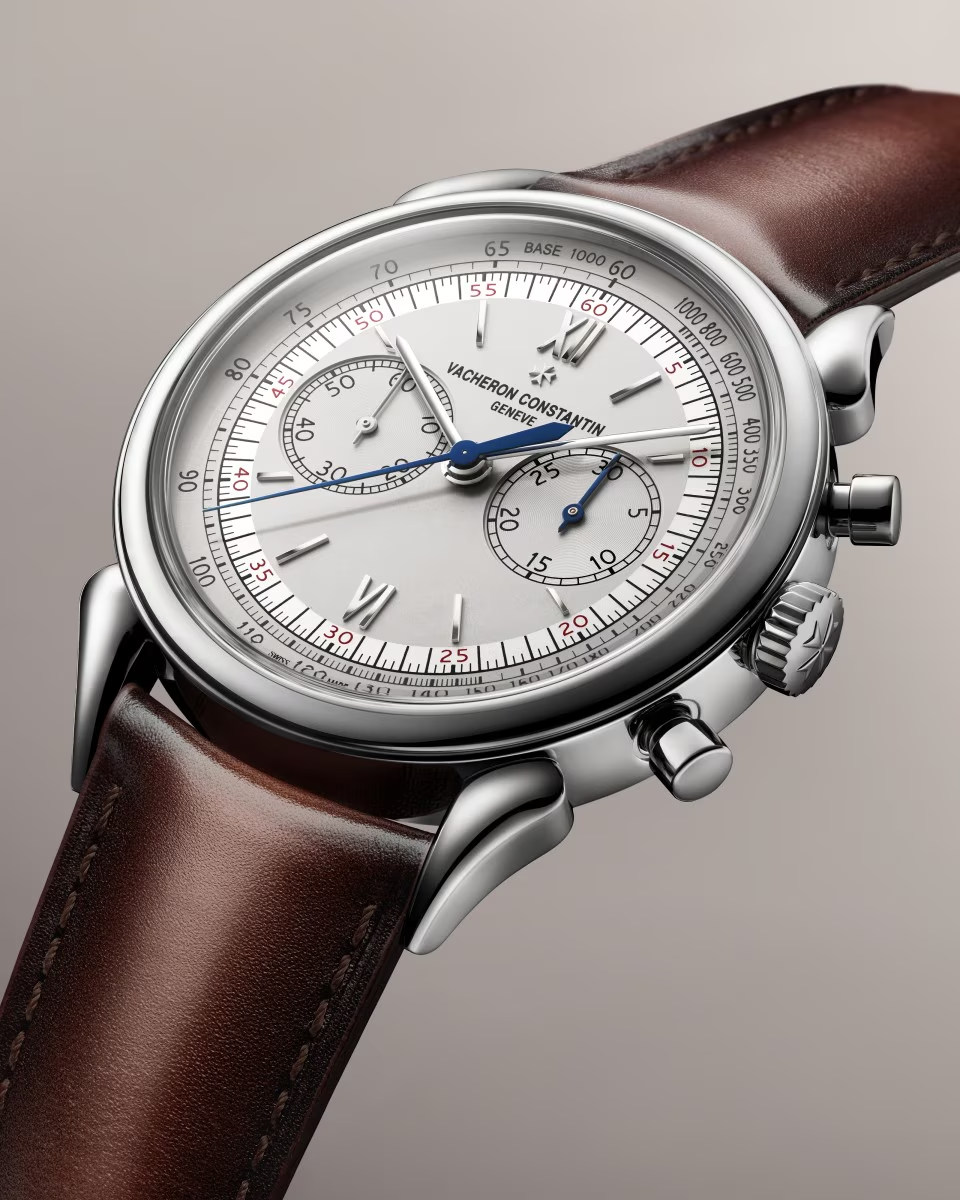
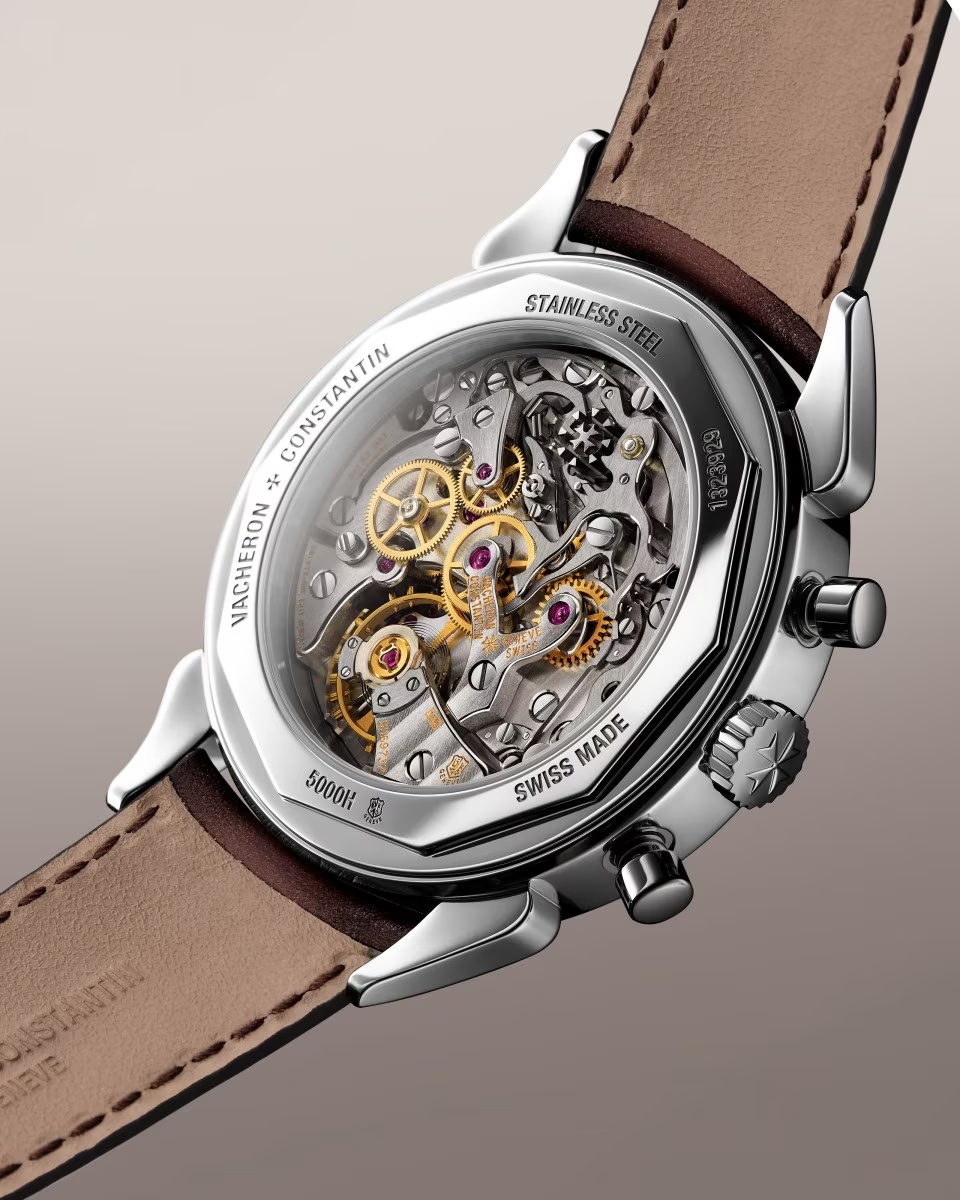
Vacheron Constantin Historiques Cornes de Vache 1955 Steel (ref. 5000H/000A-B582)
Launched: Cornes de Vache reissue in 2015 (platinum, then rose gold); this steel version in October 2019. Dimensions: 38.5 mm × 10.9 mm thick × ~47 mm lug-to-lug. Secondary market: ~$28,000–$35,000 (retail ~$53,000).
The collection. The Historiques line is Vacheron’s heritage archive made wearable — faithful reissues of significant 20th-century references, each retaining the original case shape and dial codes but rebuilt with contemporary movements and Geneva-Sealed finishing. The Cornes de Vache 1955 takes its flared “cow-horn” lugs directly from the 1955 ref. 6087 — Vacheron’s first water-resistant chronograph, of which only 36 were ever made.
Why it’s a deal. A hand-wound column-wheel chronograph, Geneva-sealed, trading 40–45% below retail. The caliber 1142 is based on the legendary Lemania 2310 — same DNA as the Patek CH 27-70 and Omega caliber 321. Mechanically in the same league as a Patek 5172 ($65K+) or Lange 1815 Chronograph ($55K+); no manual-wind chronograph at this finishing level from a Trinity brand is available for less.
The common thread
None of these are the references the brands market most aggressively, and none sit in the integrated-bracelet sports-watch category the post-pandemic market has favoured. That mismatch between intrinsic horological quality and current sentiment is exactly where value lives — these are the four smartest cheques you can write inside the Trinity today.