The integrated bracelet category gets more interesting once you step past the Royal Oak and the Nautilus. The watches below are picked on their own merits — design, innovation, identity, craft, history — rather than on hype. Four are current production, one is a recent reissue with serious historical weight. This is not an exhaustive list.
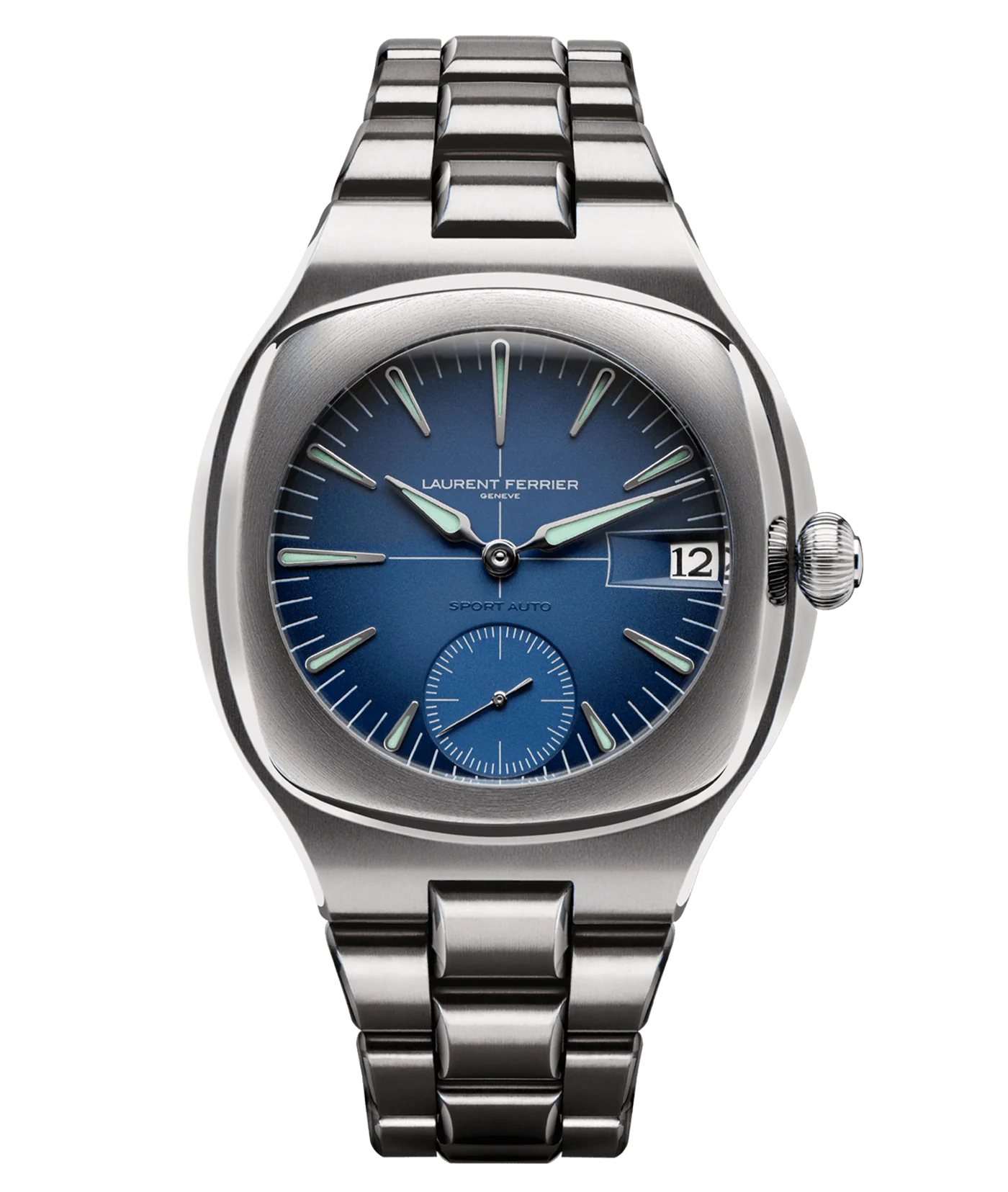
1. Laurent Ferrier Sport Auto in Titanium
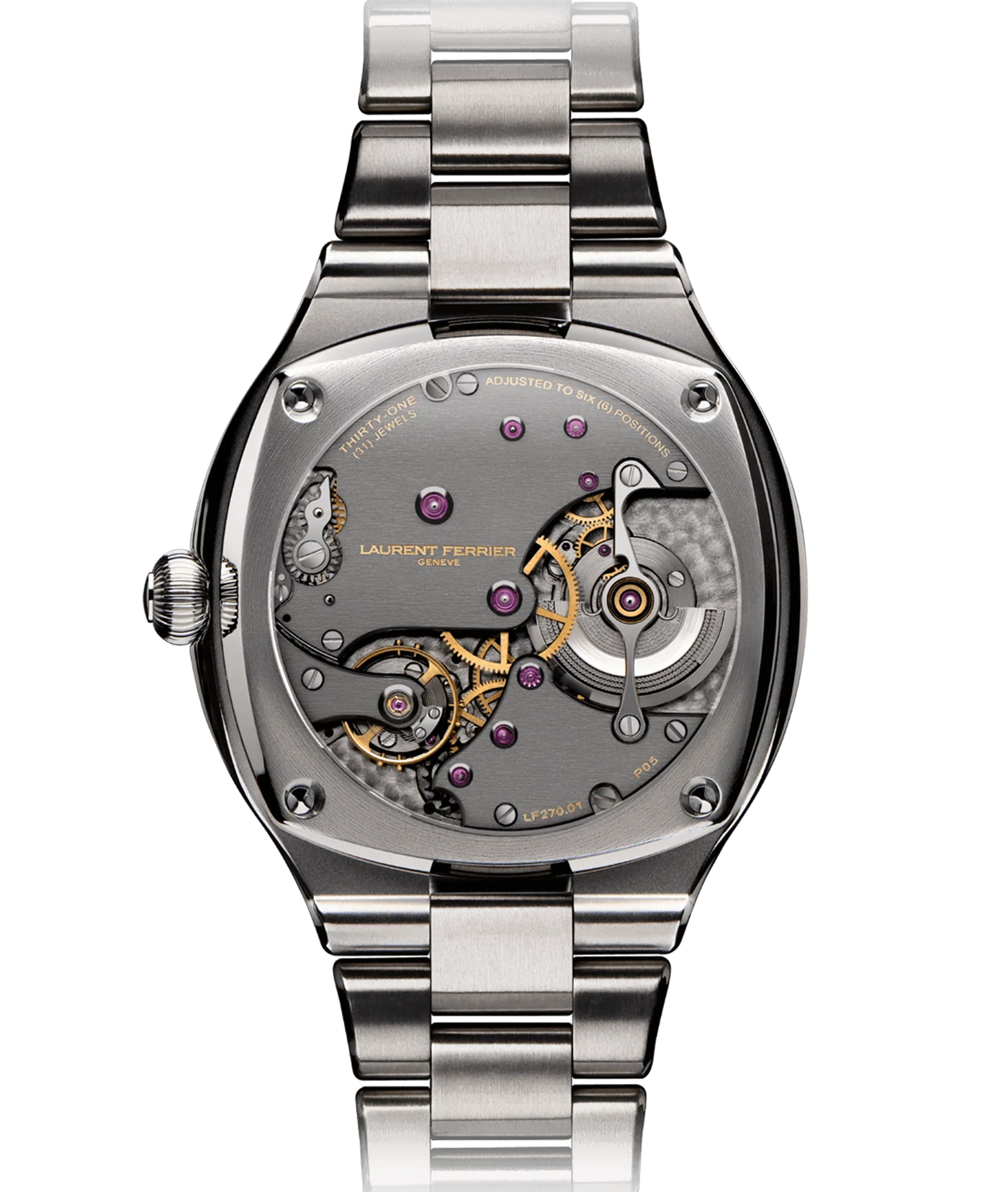
41.5 mm × 12.7 mm grade 5 titanium case with vertical satin finishing and polished flanks, integrated titanium bracelet, screw-down crown to 120 m water resistance. Blue opaline dial with snailed small seconds at 6 o’clock. The LF270.01 inside is an in-house automatic micro-rotor with a 950 platinum oscillating weight, 72-hour reserve (three times the duration of a Le Mans race), and 139 manual finishing operations per movement.
The story behind the watch is the point. Laurent Ferrier spent 37 years at one of Geneva’s great houses — but on 9 June 1979, he and his friend François Servanin finished third overall at the 24 Hours of Le Mans in their Porsche 935 Turbo, immediately behind Paul Newman in second place. Servanin’s challenge to Ferrier after the race — “what if we make our own watch?” — eventually became Maison Laurent Ferrier in 2010. The Sport Auto is the watch the two friends would have worn during the race. Understated, smooth, racing-derived without leaning on chronograph clichés, and made by one of the most respected master watchmakers alive. Around USD 53,000.
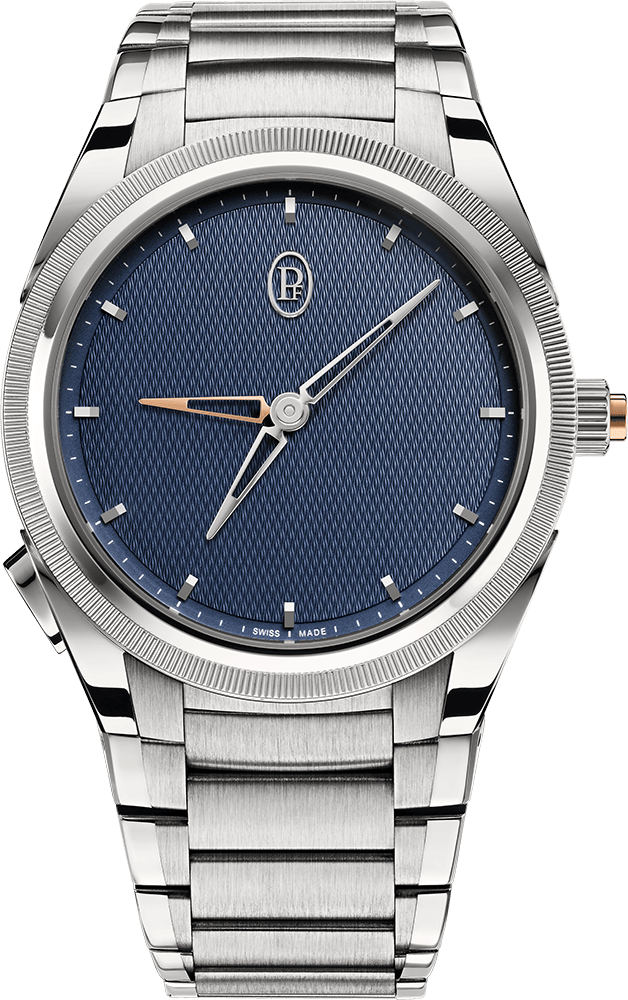
2. Parmigiani Fleurier Tonda PF GMT Rattrapante
The current high-water mark of Parmigiani’s catalogue and the watch that established “hidden complications” as the brand’s defining idea. 40 mm steel case, fluted platinum bezel, Milanese blue Grain d’Orge guilloché dial, integrated bracelet. The PF501 caliber drives a world-first split-GMT mechanism: two superimposed hour hands (rhodium 18k gold for local time, rose gold for home time) where the home-time hand vanishes beneath the local-time hand at rest and reappears on demand. Travel watch as conjuring trick.
Retail is around USD 38,000, but the GMT Rattrapante has depreciated meaningfully on the secondary market — currently trading USD 23,000–28,000 for clean pieces with full set. That gap makes it one of the strongest pure-value buys in integrated-bracelet haute horlogerie. The case for the GMT being the best Parmigiani right now is straightforward: it works as a daily complication, it has been validated by four years on the wrist, and the design language has matured around it. The case for being replaced in time is the Chronographe Mystérieux unveiled at Watches & Wonders 2026 — same hidden-complications DNA, but a chronograph that disappears entirely at rest (five coaxial hands, triple-clutch PF053 caliber, CHF 36,900). The GMT is what we have now; the Mystérieux is what might come next.
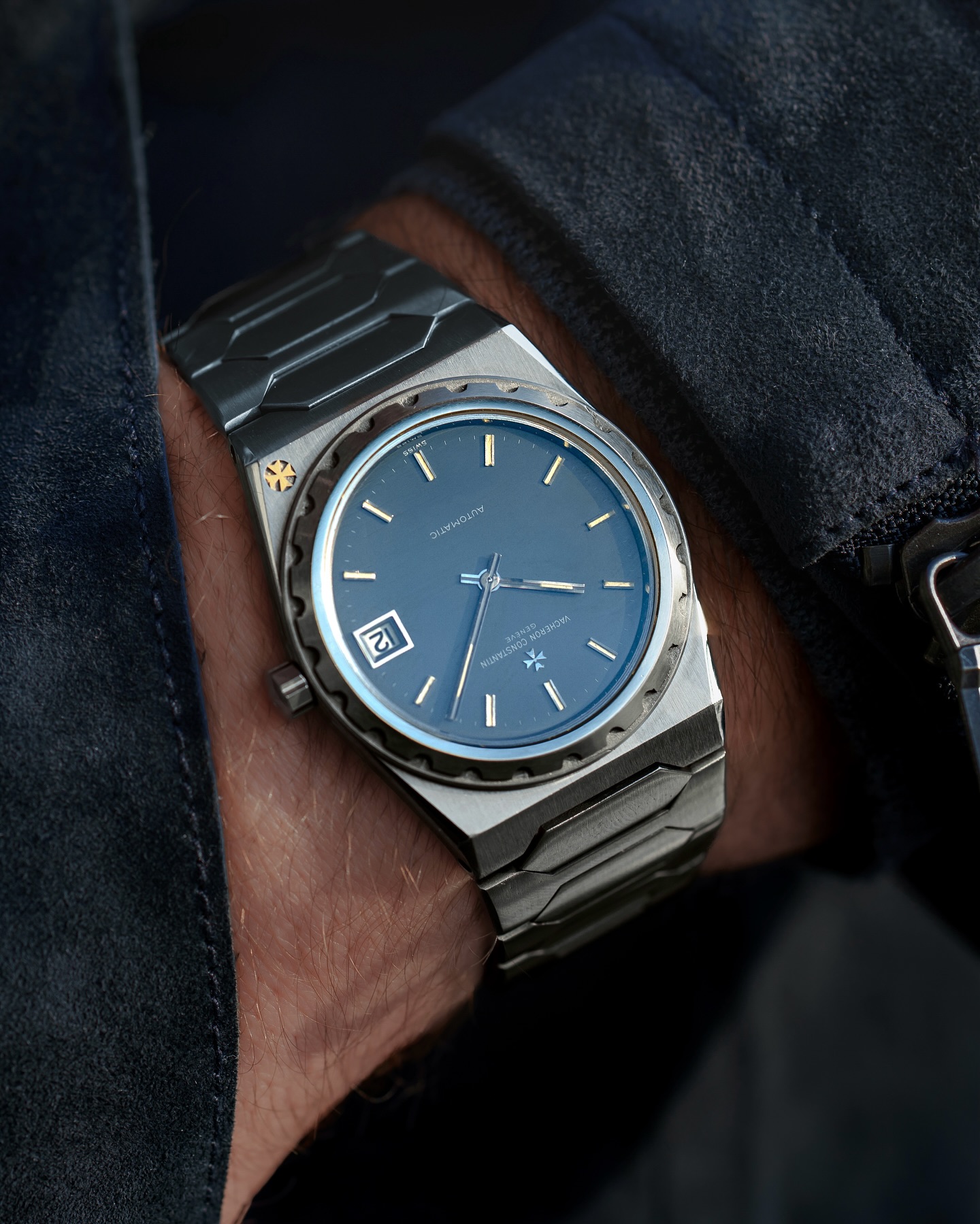
3. Vacheron Constantin Historiques 222 (Steel)
The historical missing piece. The original 222 was designed in 1977 by a 24-year-old Jörg Hysek to mark Vacheron’s 222nd anniversary — the third member of the steel integrated-bracelet triumvirate of the 1970s, but vastly rarer (fewer than 500 made in steel between 1977 and 1984) and for decades miscredited to Genta.
Vacheron reissued the 222 in yellow gold in 2022 for Watches & Wonders, then in stainless steel in 2025 for the maison’s 270th anniversary. The steel version, reference 4200H/222A-B934: 37 mm × 7.95 mm, matte blue dial, yellow gold Maltese cross applied at 5 o’clock, hexagonal centre-link bracelet, in-house Caliber 2455/2 with exhibition caseback. Around USD 49,300.
The 222 belongs on this list because it is canon — the integrated bracelet without it is an incomplete history — and because Vacheron runs an allocation system you can actually engage with: walk in, have a conversation, buy the watch.
4. H. Moser & Cie. Streamliner Small Seconds Blue Enamel
39 mm steel case (down from the original Streamliner’s 42 mm), 10.9 mm thick, integrated steel bracelet, 120 m water resistance, Aqua Blue fumé Grand Feu enamel dial on a hammered gold base. CHF 29,900 / USD 37,720. The HMC 500 inside is Moser’s first automatic with a solid platinum micro-rotor — also their thinnest 21st-century caliber, 4.5 mm thick, 74-hour power reserve.
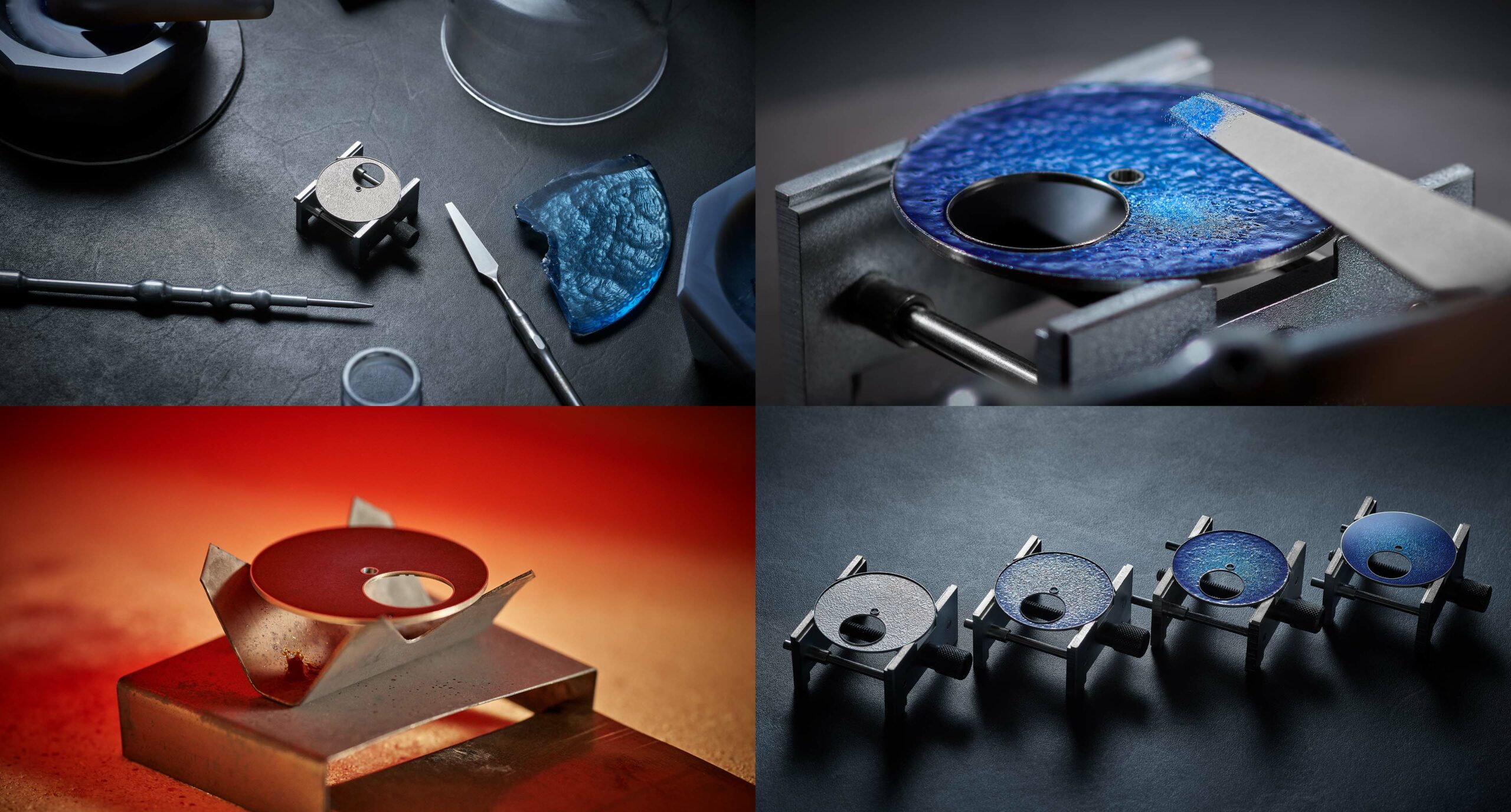
The 39 mm Streamliner is the sizing this case design always wanted: the cushion-shaped case (inspired by 1930s American Streamliner trains) needed a smaller diameter to balance properly on the wrist, and 39 × 10.9 mm is essentially universal. What sets the Streamliner apart from every other watch on this list is the dial. Moser’s enamel work — twelve firings, ombré gradient, no logo on the dial — produces colours nothing else in haute horlogerie achieves: the Aqua Blue fumé, the Matrix Green, the Purple Haze, the salmon variants. Moser doesn’t release watches at production scale; the Streamliner is independently made, family-controlled, and irrefutably its own thing.
5. Czapek Antarctique
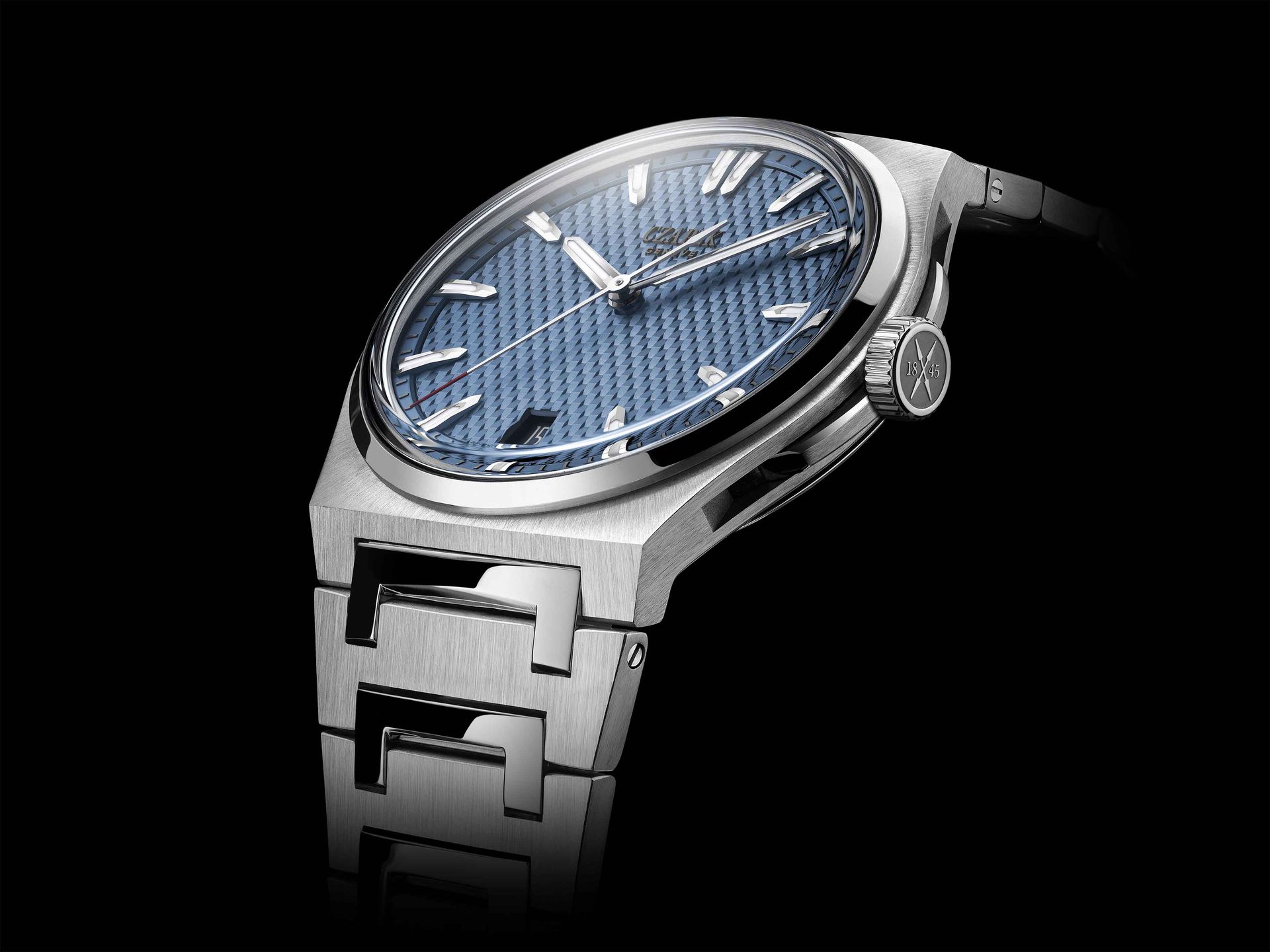
40.5 mm × 10.6 mm steel case, integrated steel bracelet with straight-cut links, sapphire caseback, 120 m water resistance. Stairway to Eternity vertical guilloché dial in blue, hand-stamped at Czapek’s Comblémine dial workshop. Caliber SXH5 inside is a micro-rotor automatic developed with Jean-François Mojon at Chronode: 60-hour reserve, hand-finished bridges, visible through the back. Around CHF 21,500 / USD 24,000 in steel.
The story is where Czapek separates from the rest. Czapek & Cie is the modern revival of Franciszek Czapek’s eponymous firm, opened in Geneva in 1845 after his founding partnership with Antoni Patek dissolved — the same year Patek began the partnership that would become Patek Philippe. The current Czapek was refounded in 2012 by Xavier de Roquemaurel and a group of collector-investors; the brand is genuinely independent, owned by people who care about it more than about a return horizon. The Antarctique, launched in 2020, is the rare integrated-bracelet sports watch from a Geneva-based independent producing this level of guilloché and movement finishing in-house. It earns the slot on the dial, the caliber, and the architecture — without leaning on either neighbour’s heritage.
The takeaway
Five watches, four current production plus one historical reissue. Laurent Ferrier for craft and racing pedigree, Parmigiani for innovation, Vacheron for canon, Moser for colour and identity, Czapek for finishing and the Geneva lineage. Five different reasons to be interested in the category.